How Midfield Control Decides the Outcome of Big Matches
|
Getting your Trinity Audio player ready... |
“Show me a great team, and I’ll show you a great midfield.” This old football adage remains the ultimate truth of the beautiful game. You can have the most prolific strikers in the world and a defensive wall made of granite, but if you lose the battle in the center of the pitch, your chances of winning a major final drop drastically.
The midfield is the engine room. It is where matches are dictated, where tempo is set, and where the transition between defense and attack takes place. In high-stakes matches—whether it is a UEFA Champions League Final, a World Cup knockout stage, or a top-of-the-table Premier League clash—the margins are razor-thin. Both teams usually boast world-class talent, meaning the outcome is rarely decided by sheer individual brilliance alone. Instead, it comes down to control.
But what exactly does “midfield control” mean? It is not just about keeping 70% possession for the sake of it. It is about spatial awareness, disrupting the opponent’s rhythm, suffocating their counter-attacks, and feeding your forwards in dangerous areas.
In this comprehensive guide, we will break down exactly how midfield control decides the outcome of big matches. We will explore the vital roles players take up, look at historical examples of midfield dominance, and explain the modern tactical trends that are reshaping the game today.
The Engine Room: Why the Midfield is the Most Crucial Area of the Pitch
To understand why the midfield dictates the game, we must look at the geography of a football pitch. The center circle and its surrounding zones connect every other part of the field. Whoever controls this central real estate dictates the flow of the match.
Dictating the Tempo
Tempo is the heartbeat of a football match. When a team is winning and wants to kill the game, a controlling midfield will pass the ball laterally, slowing down the pace and draining the opponent’s energy. Conversely, if a team needs a goal, the midfield will inject urgency by playing line-breaking vertical passes.
When you control the midfield, you control the clock. You decide when the game becomes a frantic sprint and when it becomes a slow, methodical chess match. In big games, emotional control is just as important as tactical control. A panicked team makes mistakes; a team that dominates the midfield stays calm under pressure.
The Shield and the Sword
A top-tier midfield serves a dual purpose. It acts as both the shield for the defense and the sword for the attack.
- The Shield: By keeping the ball, you deny the opposition the chance to attack. Furthermore, a well-positioned midfield immediately counter-presses when the ball is lost, stopping fast breaks before they even reach the defenders.
- The Sword: Midfielders are the primary creators. They analyze the opponent’s defensive structure, find the gaps, and deliver the killer pass. Without this service, elite strikers are left isolated and ineffective.
Key Tactical Roles That Dominate the Midfield
Midfield control is rarely achieved by a single player. It requires a balanced ecosystem of different profiles working in harmony. Here are the three most critical roles that managers use to win the midfield battle.
The Deep-Lying Playmaker (The Regista)
The deep-lying playmaker sits just in front of the defense. Their primary job is not to tackle, but to orchestrate. They possess elite vision, composure, and passing range.
When a team is under pressure, the regista provides a safe passing option. They dictate the play from deep, often launching long diagonal balls to switch the point of attack.
- Classic Examples: Andrea Pirlo, Xabi Alonso.
- Modern Masters: Rodri, Toni Kroos (recently retired), Enzo Fernández.
The Box-to-Box Dynamo
To control a big match, you need energy. The box-to-box midfielder is the engine that never stops running. They contribute defensively by making crucial interceptions on the edge of their own penalty box, and seconds later, they are making a late run into the opponent’s box to score.
In high-intensity matches, these players overwhelm the opposition through sheer physical dominance and spatial intelligence, winning the “second balls” that often define tight games.
- Classic Examples: Steven Gerrard, Roy Keane.
- Modern Masters: Jude Bellingham, Federico Valverde, N’Golo Kanté.
The Defensive Anchor (The Destroyer)
You cannot have creative freedom without defensive security. The defensive anchor is tasked with breaking up opposition play. They read the game, anticipate passes, and put in the hard tackles.
By having a dedicated destroyer, the more creative midfielders are freed from heavy defensive burdens, allowing them to focus on breaking down the opposition.
- Classic Examples: Claude Makélélé, Patrick Vieira.
- Modern Masters: Casemiro (at his peak), Declan Rice, Aurélien Tchouaméni.
Historical Proof: When Midfield Masters Won the Biggest Trophies
History is littered with examples of teams that achieved greatness not just through their strikers, but through legendary midfield combinations.
Xavi, Iniesta, and Busquets: The Peak of Possession
Pep Guardiola’s Barcelona (2008–2012) is often cited as the greatest club team in history, and it was built entirely around three men: Xavi Hernández, Andrés Iniesta, and Sergio Busquets.
They popularized “Tiki-Taka,” a style based on short, rapid passing and maintaining overwhelming possession. In the 2011 Champions League Final against Manchester United, Barcelona didn’t just beat Sir Alex Ferguson’s side; they suffocated them. Busquets provided the anchor, Xavi set the metronomic tempo, and Iniesta provided the magic. They hid the ball from United, proving that absolute midfield control makes the opponent’s attacking threats completely irrelevant.
Modrić, Kroos, and Casemiro: Transition Kings
While Barcelona dominated through possession, Real Madrid’s legendary trio of Luka Modrić, Toni Kroos, and Casemiro dominated the late 2010s and early 2020s through unparalleled adaptability.
During their historic “Three-Peat” of Champions League titles (2016–2018) and subsequent victories, this trio showed how to control a game in multiple ways. Casemiro destroyed opposition attacks, Kroos dictated the tempo with his laser-accurate passing, and Modrić used his elite dribbling to break defensive lines. They didn’t always need 70% possession; they just controlled the crucial moments of the match.
Modern Tactical Trends: Pressing and Inverted Fullbacks
Football is constantly evolving. In the modern game, the battle for the midfield has become even more complex due to structural innovations.
Gegenpressing and Midfield Chaos
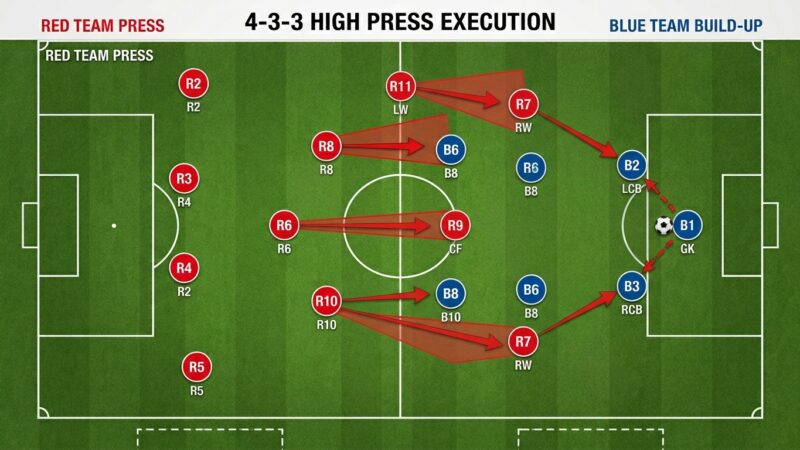
Managers like Jürgen Klopp revolutionized the game by prioritizing “Gegenpressing” (counter-pressing). Instead of dropping back when losing the ball, the team instantly presses the opponent like a pack of wolves.
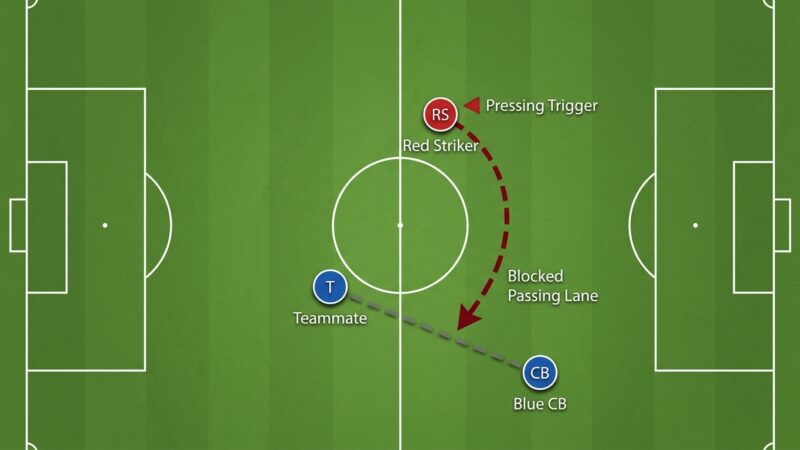
In this system, midfield control is not about passing the ball endlessly; it is about controlling the space. By forcing turnovers high up the pitch, the midfield becomes an aggressive attacking weapon. A successful high press completely bypasses the traditional build-up phase, catching the opposition disorganized.
The Inverted Fullback Phenomenon
To win the midfield numbers game, modern tacticians like Pep Guardiola and Mikel Arteta have popularized the “inverted fullback.”
Instead of traditional fullbacks who run up and down the touchline, players like Trent Alexander-Arnold, Oleksandr Zinchenko, and John Stones tuck inside alongside the defensive midfielder when their team has the ball.
- The Benefit: This creates a 3-box-3 or 3-2-4-1 formation in possession, giving the attacking team an extra man in the midfield.
- The Result: The opposition is constantly outnumbered in the center of the park, making it nearly impossible for them to win the ball back.
Stats That Matter: Measuring Midfield Dominance
To truly understand how a team controlled a big match, analysts look beyond basic possession stats. Today, advanced metrics paint a clearer picture of midfield dominance:
- Pass Completion in the Final Third: High completion rates here indicate a midfield that can unlock tight defenses rather than just passing safely at the back.
- Progressive Carries: How often a midfielder dribbles the ball forward into dangerous areas, breaking lines and disrupting the defensive shape.
- xG Buildup (Expected Goals Buildup): This measures a player’s involvement in a possession sequence that leads to a shot, excluding the actual assist or shot itself. It is the ultimate stat for deep-lying playmakers.
- Possession Won in the Middle Third: This highlights a team’s pressing efficiency and their ability to dominate transitions.
Frequently Asked Questions (FAQs)
1. Why is possession in the midfield so important?
Possession in the midfield allows a team to dictate the pace of the game. It forces the opposition to chase the ball, tiring them out both physically and mentally, while simultaneously minimizing the opponent’s chances to attack.
2. What is a “double pivot” in football?
A double pivot refers to playing two defensive or central midfielders side-by-side in front of the defense (often seen in a 4-2-3-1 formation). It provides extra defensive stability and helps teams control the center of the pitch by having two players available to recycle possession.
3. Can a team win a big match without controlling the midfield?
Yes, but it requires a very specific tactical setup, usually involving deep defending (“parking the bus”) and lethal, fast counter-attacks. However, relying on this strategy is risky in high-stakes matches, as sustaining immense pressure for 90 minutes often leads to defensive errors.
4. Who is considered the greatest midfielder of all time?
This is highly subjective and depends on the era and role. Diego Maradona and Zinedine Zidane are often cited for their attacking brilliance, while Xavi Hernández and Lothar Matthäus are revered for their complete control and box-to-box dominance.
5. How do inverted fullbacks help control the midfield?
When a team has the ball, a fullback moves from the wide defensive position into the central midfield. This creates a numerical advantage (an “overload”) in the center of the pitch, making it easier to keep the ball, out-pass the opposition, and prevent counter-attacks.
Conclusion
The evolution of football tactics has changed many things, but the fundamental truth remains: the team that controls the midfield controls the match.
From the suffocating possession of Guardiola’s Barcelona to the relentless counter-pressing of modern Premier League giants, the methods may vary, but the goal is the same. Midfielders dictate the tempo, protect the defense, and create the attacking chances that ultimately win trophies. In big matches, where the pressure is immense and the margins for error are non-existent, midfield dominance is the ultimate separator between the champions and the runners-up.
The next time you watch a Champions League Final or a World Cup knockout match, look past the goalscorers. Focus your eyes on the center of the pitch. That is where the real chess match is happening, and that is exactly where the game will be won.
Love deep-dive tactical analysis? Explore more of our football content! Check out our latest articles on [Tactical Breakdowns], [Player Profiles], and [Match Previews] to stay ahead of the game. Don’t forget to subscribe to our newsletter for weekly insights delivered straight to your inbox!

My name is Jeferson, a passionate football enthusiast and the creator of this portal dedicated to fans of the world’s most popular sport. My goal is to provide reliable information, up-to-date news, match analysis, transfer updates, tournament coverage, and everything happening both on and off the pitch.