Set Pieces in Football: Why They Are More Important Than Ever
|
Getting your Trinity Audio player ready... |
Imagine the dying seconds of a tightly contested cup final. The attackers are exhausted, the defenders are entrenched in a flawless low block, and open-play creativity has completely dried up. Suddenly, the whistle blows for a corner. In modern football, this isn’t just a hopeful cross into the box—it is a meticulously choreographed, data-driven offensive strike.
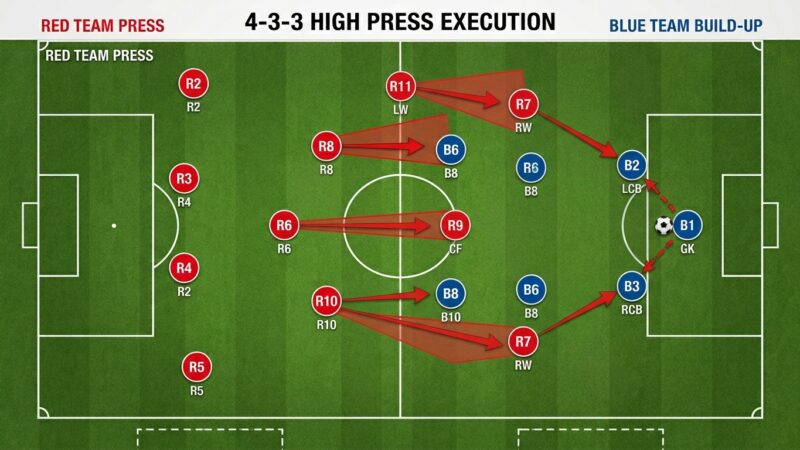
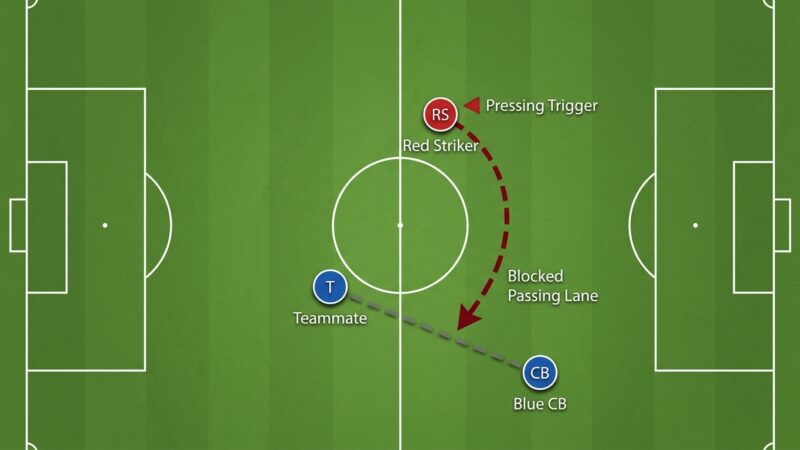
Over the past decade, the beautiful game has undergone a tactical revolution. As defensive structures have become harder to break down and high-pressing systems neutralize traditional playmakers, elite teams have realized an undeniable truth: set pieces are the ultimate match-winners.
Gone are the days when a manager would simply tell their tallest center-back to “go up and cause some chaos.” Today, dead-ball situations are treated with the same reverence as open-play transitions. In this article, we’ll explore exactly why set pieces have become more important than ever, the rise of specialist coaches, the analytics behind the trend, and how top clubs are using corners and free-kicks to secure marginal—yet massive—gains.
Main Content
The Evolution of the Set Piece in Modern Football
To understand why set pieces are dominating the modern era, we have to look at how the sport as a whole has evolved. Football has never been faster, fitter, or more tactically rigid.
From Afterthought to Tactical Obsession
Historically, set pieces were seen as a bonus—a lucky break that relied mostly on the individual brilliance of a dead-ball specialist like David Beckham, Juninho Pernambucano, or Andrea Pirlo. Teams practiced them, of course, but training sessions were largely dedicated to possession, shape, and fitness. A corner routine usually consisted of a basic outswinging cross aimed at the penalty spot.
Today, that approach is ancient history. Modern defensive units are incredibly compact. Teams playing a “low block” sit deep, compressing the space between their defense and midfield, making it incredibly difficult for even the most creative teams—like Manchester City or Barcelona—to pass their way through.
Because open play goals are harder to come by against well-organized defenses, managers have turned to the one phase of the game they can entirely control: the dead ball. A set piece pauses the game. It allows the attacking team to reset, position their players perfectly, and execute a pre-planned routine without the chaotic interference of a moving ball.
The Rise of the Specialist Set-Piece Coach
Perhaps the biggest indicator of the set-piece renaissance is the emergence of the specialist set-piece coach. Just as NFL teams have special teams coordinators, elite football clubs are now hiring experts whose sole job is to design corner and free-kick routines.
- Nicolas Jover: Plucked from Manchester City by Mikel Arteta, Jover transformed Arsenal into arguably the most lethal set-piece team in Europe, utilizing clever blocking techniques and decoy runs.
- Gianni Vio: The Italian tactician famously has a playbook of over 4,800 set-piece routines. His work with the Italian national team was a crucial factor in their Euro 2020 triumph.
- Austin MacPhee: Aston Villa’s set-piece guru has turned the Midlands club into a constant threat from dead-ball situations, helping propel them into the Champions League.
These coaches don’t just design attacking routines; they meticulously plan defensive setups, analyzing opposition weaknesses to exploit space and timing.
The Data Behind the Dead Ball
You cannot discuss modern football without mentioning analytics. The integration of data science into the sport has fundamentally shifted how clubs view set pieces.
How Analytics Changed the Game
When clubs started looking at Expected Goals (xG)—a metric that measures the quality of a goalscoring chance—a glaring pattern emerged. While a long-range shot from open play might have an xG of 0.02 (a 2% chance of scoring), a well-executed corner routine leading to a shot inside the six-yard box can boast an xG of 0.30 or higher.
Data analysts realized that football is a game of fine margins. If a team can generate high-quality chances from the 10 to 15 corners and attacking free-kicks they get per game, they can effectively bypass the need for 60% possession or intricate passing sequences.
The Percentage Game: How Many Goals Come from Set Pieces?
The statistics are staggering. Depending on the league and the season, between 25% and 33% of all goals scored in elite football come from set pieces.
Let’s break down why this statistical reality is so important for modern teams:
- Equalizing the Playing Field: For mid-table or relegation-threatened teams, set pieces offer a reliable way to score against superior opposition. You don’t need a £100 million striker to score a corner; you just need a great delivery and a cohesive plan.
- Tournament Football: In knockout tournaments like the World Cup or the Champions League, games are often tight and cagey. Data shows that in major international tournaments, the percentage of goals scored from set pieces often spikes beyond 30%. England’s run to the 2018 World Cup semi-finals was almost entirely built on their proficiency from dead balls.
Key Components of a Lethal Set-Piece Strategy
So, what makes a modern set-piece routine so dangerous? It is no longer just about whipping the ball into the mixer. It is about spatial manipulation, basketball-style screens, and psychological warfare.
The Delivery: Inswingers vs. Outswingers
The foundation of any set piece is the delivery. If the ball isn’t put in the right area with the right pace, the routine falls apart. In recent years, data has heavily favored the inswinging delivery.
- Inswingers: Curving toward the goal. These are inherently more dangerous because any touch—from an attacker or a defending player—can redirect the ball into the net. It forces the goalkeeper to make split-second decisions about whether to stay on their line or come out into traffic.
- Outswingers: Curving away from the goal. While easier to attack with a running header, they require the attacker to generate all the power.
Elite teams now prioritize inswingers, aiming for the “corridor of uncertainty” between the penalty spot and the six-yard box.
The Run, The Block, and The Screen
Modern set-piece routines look more like basketball plays than traditional football tactics. Attacking teams use coordinated movements to free up their best header of the ball.
- The Screen: Attackers will intentionally stand in the way of specific defenders to stop them from tracking a runner. This is designed to create a momentary mismatch or a free run at the ball.
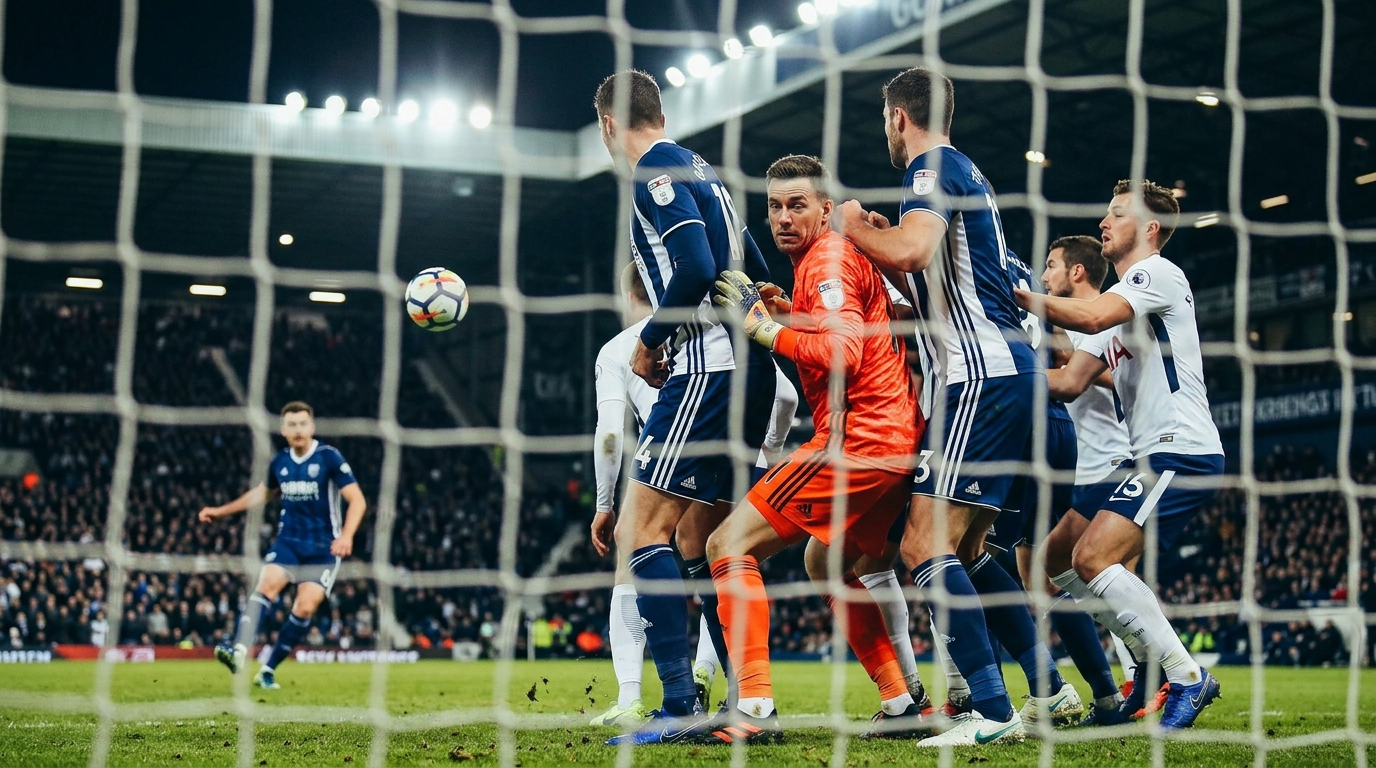
- Crowding the Keeper: Teams will place two or three players directly surrounding the opposition goalkeeper. This pins the keeper to their line, preventing them from claiming the cross and causing panic in the defensive ranks.
- The “Love Train”: Popularized by England, this involves attacking players lining up in a single file line before bursting outward in different directions as the ball is kicked, making it impossible for man-to-man markers to follow them.
Decoys and Second Balls
Not every set piece is designed to be scored on the first touch. Many teams deliberately aim for a “knockdown” or a flick-on at the near post, exploiting the chaos that ensues. Furthermore, the “second ball”—the rebound or clearance—is heavily contested. Teams position players specifically on the edge of the penalty box (often called the “D”) to recycle possession or hit a devastating volley if the defense only half-clears the danger.
Case Studies: Teams Mastering the Dark Arts of Dead Balls
Let’s look at a few examples of how these strategies play out at the highest levels of the sport.
Arsenal: The Premier League Benchmark
In the 2023/2024 Premier League season, Arsenal established themselves as the undisputed kings of the corner kick. Under Nicolas Jover, the Gunners utilized a distinct strategy:
- Inswinging Deliveries: Provided heavily by Declan Rice and Bukayo Saka.
- Near-Post Overload: Arsenal crowded the near post, dragging defenders away from the center.
- Back-Post Isolation: Gabriel Magalhães, their towering center-back, was routinely isolated at the back post, benefiting from the space created by his teammates’ decoy runs.
Their dominance from dead balls essentially added a reliable goal-a-game to their title charge, proving that tactical preparation can break down the most stubborn defenses.
Brentford & Midtjylland: Moneyball and Dead Balls
The revolution arguably started with clubs operating on smaller budgets. Brentford (in England) and FC Midtjylland (in Denmark), both owned by Matthew Benham, utilized strict data models to compete with wealthier clubs. They realized early on that set pieces were an undervalued asset in the football market.
By treating throw-ins, corners, and free-kicks with obsessive detail, Brentford managed to secure promotion to the Premier League and comfortably survive, routinely bloodying the noses of the “Big Six” by dominating the dead-ball phases.
Real Madrid & The Champions League DNA
While Real Madrid is known for their flair and superstars, their success in the Champions League is heavily reliant on clutch set-piece moments. Whether it was Sergio Ramos’s legendary 93rd-minute equalizer against Atlético Madrid in 2014, or Carlo Ancelotti’s masterful use of Toni Kroos’s deliveries to Antonio Rüdiger, Los Blancos understand that when the game is suffocatingly tight, a single corner is enough to conquer Europe.
Defensive Set Pieces: The Unsung Hero of Clean Sheets
You cannot master set pieces without knowing how to defend them. A lethal attacking set-piece record means nothing if you concede from every corner you face.
Zonal vs. Man-to-Man Marking
The debate over how to defend a corner is one of football’s oldest arguments.
- Man-to-Man: Defenders are assigned a specific attacking player to follow. Pros: Clear accountability. Cons: Easily disrupted by modern blocking and screening tactics.
- Zonal Marking: Defenders are assigned a specific area (zone) of the penalty box to attack the ball, regardless of who enters it. Pros: Defenders can attack the ball while looking forward, rather than running backward with an attacker. Cons: If an attacker gets a running jump on a static defender, the attacker usually wins.
Modern elite teams almost exclusively use a hybrid system. They will place their best aerial defenders in zonal positions across the six-yard box (to clear the immediate danger) while using two or three “blockers” to man-mark the opposition’s most dangerous runners and disrupt their momentum.
Transitions and Counter-Attacks
Defending a corner isn’t just about surviving; it’s an attacking opportunity. Because the opposing team sends their center-backs forward, they leave massive spaces in behind. Teams like Liverpool under Jürgen Klopp mastered the art of catching a corner and immediately launching a rapid counter-attack via Mohamed Salah, turning defensive moments into devastating goals within 10 seconds.
The Future of Set Pieces in Football
As the sport continues to evolve, the set piece will only grow in importance. But what does the future hold?
Innovation and Artificial Intelligence
Clubs are already beginning to use AI and machine learning to analyze thousands of hours of corner kicks. In the near future, AI models will likely predict opposition defensive setups in real-time, allowing tablet-wielding coaches on the bench to send specific adjustments to players on the pitch mid-game.
Rule Changes and Their Impact
Football’s governing bodies are continuously looking at ways to speed up the game. Stricter rules on time-wasting, precise injury-time calculations, and multi-ball systems mean the ball is in play longer. However, this also means teams must be quicker and more efficient in setting up their dead-ball routines. The teams that can execute complex routines rapidly before the defense can set their shape will hold a massive advantage in the coming decade.
Frequently Asked Questions (FAQ)
1. What percentage of goals are scored from set pieces in football? Historically, across Europe’s top five leagues, set pieces account for roughly 25% to 30% of all goals scored. In major international tournaments like the World Cup, this figure can sometimes rise above 30%, as national teams have less time to develop fluid open-play chemistry.
2. What exactly does a set-piece coach do? A set-piece coach is a specialist staff member responsible for designing, analyzing, and implementing routines for corners, free-kicks, throw-ins, and penalties. They study the opposition’s defensive setups to find exploitable weaknesses and run specific drills during training to perfect delivery and player movement.
3. Why do teams prefer inswinging corners over outswinging corners? Data shows that inswinging corners (curving toward the goal) result in more goals. They are harder for goalkeepers to judge, and any slight touch by an attacker or a defender is likely to direct the ball toward the net. Outswingers curve away from the goal, requiring the attacker to generate all the power to head the ball back toward the target.
4. What is the difference between zonal and man-to-man marking? In man-to-man marking, a defender is tasked with following a specific opposition player wherever they go. In zonal marking, a defender is assigned a specific area of the penalty box and must clear any ball that enters their zone. Most top teams today use a hybrid of both to maximize defensive solidity.
5. Who are considered the best set-piece takers in football history? While subjective, legendary dead-ball specialists include Juninho Pernambucano, David Beckham, Lionel Messi, Roberto Carlos, Andrea Pirlo, and modern-day specialists like James Ward-Prowse and Trent Alexander-Arnold.
Conclusion
The transformation of the set piece from a random lottery into a highly scientific, meticulously planned weapon is one of the most fascinating tactical shifts in modern football. As high-pressing systems and impenetrable low blocks make open-play goals increasingly difficult to manufacture, the dead ball remains the ultimate equalizer and match-winner.
The rise of the set-piece coach, the heavy reliance on data analytics, and the adoption of basketball-style screens prove that football is now a game won in the margins. Whether you are a relegation-battling underdog trying to survive or a European giant chasing Champions League glory, mastering corners and free-kicks is no longer optional—it is a fundamental requirement for success.
The next time you watch a match and the referee points to the corner flag in the 89th minute, pay close attention. You aren’t just watching a cross into the box; you are witnessing months of data analysis, specialized coaching, and tactical choreography unfolding in real-time.
Want to dive deeper into the tactical side of the beautiful game? Explore our latest articles on modern football formations, player analysis, and coaching strategies to stay ahead of the game. Click here to read more!

My name is Jeferson, a passionate football enthusiast and the creator of this portal dedicated to fans of the world’s most popular sport. My goal is to provide reliable information, up-to-date news, match analysis, transfer updates, tournament coverage, and everything happening both on and off the pitch.