The Financial Powerhouses Shaping European Football
|
Getting your Trinity Audio player ready... |
European football is no longer just about trophies and local pride; it’s a multibillion-dollar industry where financial firepower often determines who competes at the very top. From legacy giants with global brands to new-era clubs backed by sovereign wealth and private investors, money shapes transfers, stadiums, youth development and global reach. This article pulls back the curtain on the financial powerhouses shaping European football today, explaining how funding mechanisms work, who the major players are, and what that means for fans and the sport’s competitive balance.
Main Content
Why finance matters in football (H2)
Football’s competitive engine runs on money. Clubs with strong finances can:
- Buy top players and pay higher wages.
- Invest in coaching, analytics, and scouting networks.
- Modernize stadiums and matchday experiences.
- Expand global commercial partnerships and media rights.
Those advantages often translate into on-pitch success, which in turn feeds more revenue from prize money, sponsorship and merchandising—creating reinforcing cycles that separate the richest clubs from the rest.
Key financial models for clubs (H2)
Understanding the main financial structures helps explain how money flows into clubs.
Traditional membership model (H3)
- Example: FC Barcelona (pre-2020s structure, club socios).
- Characteristics: Member-owned, democratic governance, revenues reinvested; slower access to large external capital.
Private ownership and investment (H3)
- Example: Manchester United (American private ownership), Chelsea (ownership transitions), AC Milan (investment groups).
- Characteristics: Owners invest equity, can inject significant capital quickly, but may prioritize returns leading to restructuring or asset sales.
State-backed and sovereign wealth ownership (H3)
- Example: Manchester City (Abu Dhabi), Paris Saint-Germain (Qatar Sports Investments).
- Characteristics: Deep pockets, strategic state interests (soft power), able to subsidize losses to build elite squads and infrastructure.
Publicly listed clubs (H3)
- Example: Juventus (previously listed), AS Roma and Borussia Dortmund have used public markets at times.
- Characteristics: Access to capital markets, investor pressure for dividends and growth, transparency requirements via financial reporting.
Hybrid models and partnerships (H3)
- Example: RB Leipzig (corporate backing via Red Bull), Benfica (commercial partnerships plus member-owners).
- Characteristics: Corporate sponsorship and ownership mixes, often heavy focus on youth development and brand activation.
The dominant financial powerhouses (H2)
Below are clubs and ownership groups that have reshaped European football through spending, commercial growth, or long-term investment strategies.
Manchester City (H3)
- Owner: Abu Dhabi United Group / City Football Group.
- Why they matter: Since takeover in 2008, City has invested heavily in elite players, world-class infrastructure (City Football Academy), and global expansion via City Football Group’s network (New York City FC, Girona, Melbourne City etc.).
- Impact: Multiple Premier League titles, Champions League competitiveness, and a model for multi-club ownership.
- Notable stat: City’s wage bill and transfer outlay consistently rank among the top five in Europe (seasonal variations apply).
Paris Saint-Germain (H3)
- Owner: Qatar Sports Investments.
- Why they matter: PSG used QSI funds to attract global stars (Neymar, Mbappé) and to commercialize the brand worldwide, helping Ligue 1’s profile.
- Impact: Domestic dominance, increased Ligue 1 TV appeal, and controversies around Financial Fair Play (FFP) compliance and state-backed influence.
Real Madrid and FC Barcelona (H3)
- Owners: Member-owned clubs (socios) with massive global brands.
- Why they matter: Historic sporting and commercial success; Real and Barca are revenue powerhouses due to broadcasting, merchandising and massive global fanbases.
- Impact: Continuous top-tier competitiveness, expensive player contracts in the past decade, and leading roles in negotiating broadcasting deals like LaLiga’s international rights.
- Notable stat: These clubs routinely occupy the top spots in Deloitte’s Football Money League for annual revenues.
Manchester United (H3)
- Owner: Glazer family (American private ownership).
- Why they matter: A global commercial machine with huge sponsorship deals, high matchday revenue and extensive international tours.
- Impact: Commercial success has sustained the club despite variable on-pitch performance, prompting fan protests and eventual takeover interest.
Bayern Munich (H3)
- Ownership: 75% member-owned with strategic corporate shareholders (Adidas, Allianz, BMW).
- Why they matter: Financially disciplined, high profitability, diversified revenue and consistent Bundesliga dominance.
- Impact: Stable balance sheets, high transfer market returns, exemplary youth development and scouting.
Other major investors and groups (H3)
- Red Bull (RB Leipzig, RB Salzburg, New York Red Bulls): Corporate model emphasizing development and data-driven recruitment.
- City Football Group (multi-club ownership across continents): Shared scouting, medical, and coaching resources.
- 777 Partners, Fenway Sports Group, INEOS: Private equity and investment groups expanding their football portfolios with new approaches to analytics, brand building, and stadium investments.
How spending influences competition (H2)
The relationship between spending and success is complex. Money alone doesn’t guarantee trophies, but it drastically improves the odds.
Transfer market dynamics (H3)
- Big spenders set market prices. When a club pays record fees, it recalibrates market valuations across the league.
- Example: Neymar’s 2017 PSG transfer (€222 million) triggered global market inflation and changed negotiations for elite players.
Wage inflation (H3)
- Top clubs drive wages up, forcing mid-tier clubs to either sell talent or engage in risky financial strategies to keep pace.
- Wage-to-revenue ratios are a key indicator of financial health; clubs exceeding sustainable thresholds risk regulatory action or insolvency.
Youth and scouting as long-term strategies (H3)
- Clubs like Ajax, Benfica and RB Salzburg combine selling talent with sporting success to remain competitive without matching the biggest spenders.
- Example: Benfica’s player trading model generated significant profits to reinvest in infrastructure and scouting networks.
Regulation and governance (H2)
Financial Fair Play and beyond (H3)
- UEFA’s Financial Fair Play (FFP), introduced in 2011, aimed to prevent clubs spending beyond their means. Rules evolved into the UEFA Club Licensing and Financial Sustainability Regulations (2023 reform proposals included stricter monitoring).
- Outcomes: Greater transparency, but wealthy owners often find legal or accounting methods to comply while still investing heavily.
Domestic regulation and licensing (H3)
- National leagues (Premier League, LaLiga, Bundesliga) have financial rules, wage limits, and licensing systems to enforce fiscal responsibility.
- Example: The Premier League has profit and sustainability rules (PSR) limiting losses over multi-year cycles.
Tax, broadcasting, and competitive balance (H3)
- Broadcasting deals determine a large share of revenue: the Premier League’s domestic and international rights remain the richest, creating advantages for English clubs.
- Tax regimes in countries like Spain, France, England and Germany influence net wages and player residency choices.
The role of sponsorship, broadcasting, and commercial income (H2)
Revenue streams define modern club power.
Broadcasting rights (H3)
- Larger leagues command higher broadcasting fees; distribution models (equal vs. merit-based) affect competitive balance.
- Example: Premier League’s equal distribution of international revenue helps mid-table clubs stay financially competitive.
Sponsorship and commercial deals (H3)
- Clubs with global brands secure lucrative shirt and stadium sponsorships.
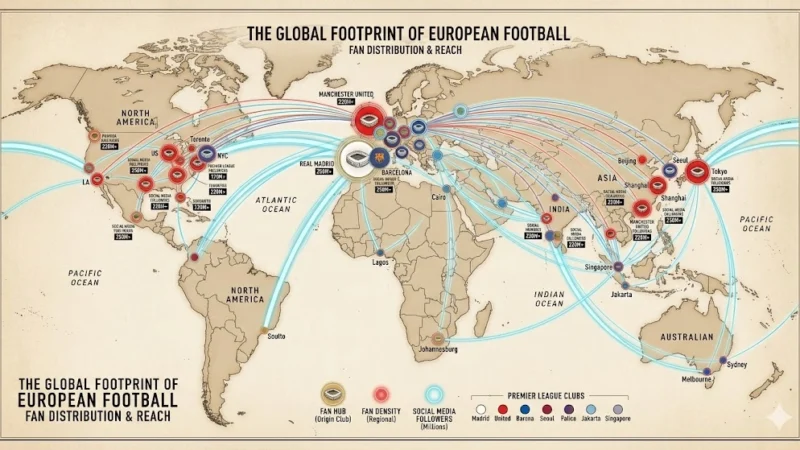
- Example: Manchester United, Real Madrid, and Barcelona generate large commercial revenues from multinational sponsors and merchandising.
Matchday and stadium revenue (H3)
- Bigger stadiums and matchday experiences (hospitality, tours) boost income.
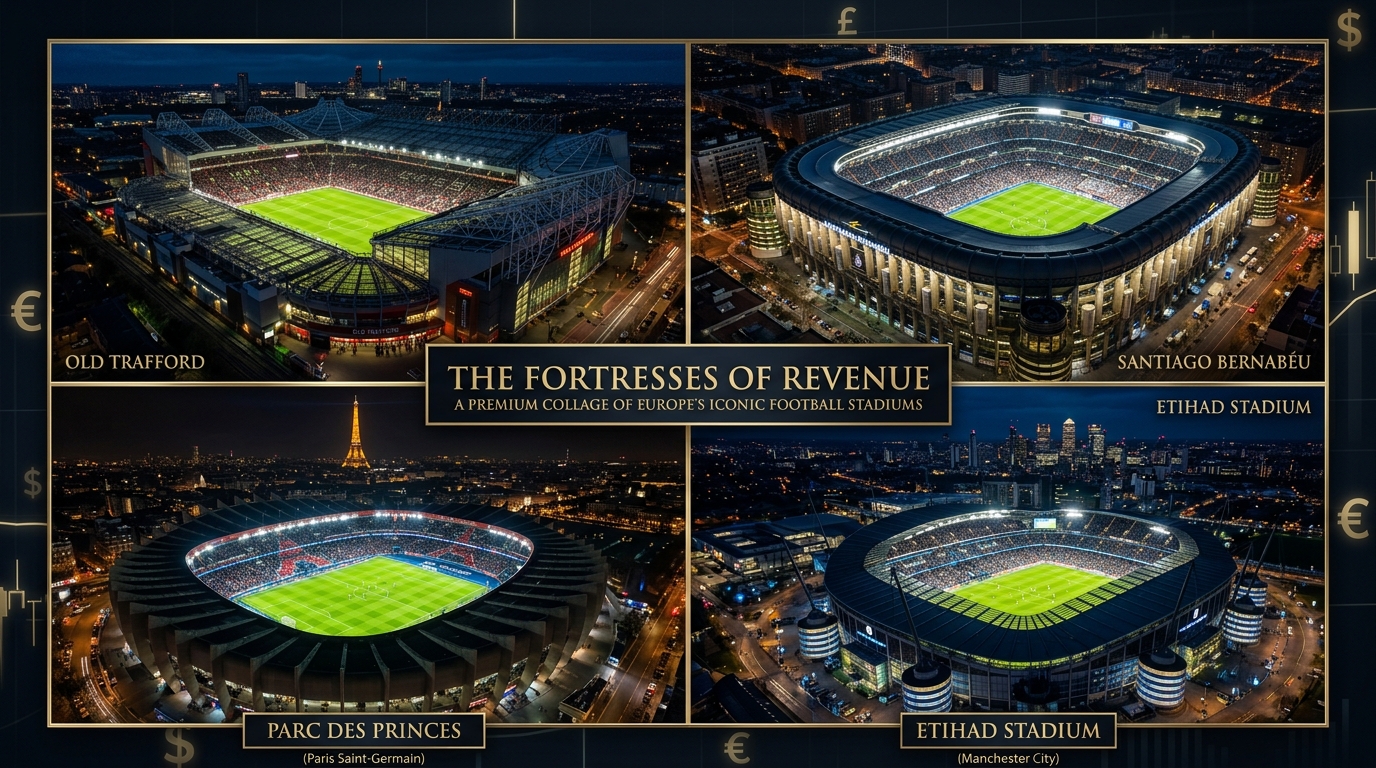
- Example: Investments in stadiums like Tottenham Hotspur Stadium generate diversified non-matchday revenue (conferences, events).
Private capital and loan financing (H3)
- Debt financing and leveraged buyouts can accelerate growth but increase financial risk.
- Example: Clubs carrying high debt loads can face transfer market restrictions or sell assets to remain solvent.
Case studies: How money changed clubs (H2)
Manchester City: From local club to global juggernaut (H3)
- Timeline: Acquisition in 2008, major infrastructure projects, trophy haul, and global network.
- Lessons: Strategic long-term investment in youth and facilities can produce sustainable success if paired with strong sporting leadership.
Paris Saint-Germain: Rapid rise with global branding (H3)
- Timeline: QSI takeover in 2011, astronomical signings, domestic dominance and Champions League ambitions.
- Lessons: Brand growth can outpace domestic league stature; UEFA scrutiny and FFP challenges can follow.
RB Salzburg and Ajax: Smart models without mega-spending (H3)
- Approach: Focused youth development, data-driven recruitment, and profitable player sales.
- Impact: Competitive in domestic leagues and regular Champions League exposure while remaining financially healthy.
Financial risks and unintended consequences (H2)
Unbalanced leagues and fan disenfranchisement (H3)
- Competitive imbalance: Concentration of wealth in a few clubs reduces unpredictability.
- Fan reaction: Proposals like the European Super League failed partly because fans resisted perceived elitism and commercialization.
Short-term success vs. long-term stability (H3)
- Risk: Owners chasing immediate trophies might saddle clubs with debt or unsustainable contracts.
- Example: Clubs that overspent without infrastructure upgrades often face relegation or forced sales.
Regulatory loopholes and legal challenges (H3)
- Clubs and owners sometimes use third-party agreements, image rights and creative accounting to navigate rules.
- Response: Regulators are tightening definitions and increasing transparency to close loopholes.
The future of football finance (H2)
Trends shaping the next decade:
- Continued multi-club networks expansion (H3)
- Expect more cross-border conglomerates pooling scouting, coaching and commercial resources for scale advantages.
- Tech, data, and fan engagement monetization (H3)
- Revenue opportunities from streaming, NFTs (declining hype but still explored), and direct-to-fan platforms.
- Regulatory tightening and fiscal transparency (H3)
- Governments and UEFA likely to refine rules to protect competitive balance and financial integrity.
- Sustainable stadium and community investment (H3)
- Clubs will increasingly emphasize ESG (environmental, social, governance) in stadium builds and operations to attract sponsors and secure public approvals.
- Rise of private equity and debt markets (H3)
- Private capital seeking returns will increase involvement, potentially accelerating consolidation and commercialization.
Expert insights (H2)
- Sporting Directors: “Smart recruitment and coaching continuity can outperform pure spending.” — Football director, European club (anonymous).
- Financial Analyst: “Broadcasting remains the most defensible income source; clubs need global rights diversification to reduce dependency on single markets.” — Sports finance analyst.
- Former player turned executive: “Player development is an asset that compounds—invest in it for long-term profitability and identity.” — Ex-pro (anonymous).
Practical takeaways for fans and stakeholders (H2)
- Fans: Understand that commercial partnerships and stadium upgrades help the club long-term, but push for transparency and community involvement.
- Club executives: Balance immediate sporting goals with infrastructure that offers future revenue streams.
- Regulators: Focus on consistent, enforceable rules across UEFA and domestic leagues to protect competitive fairness.
- Investors: Prioritize sustainable growth models and clear exit strategies given the regulatory and reputational risks.
Frequently Asked Questions (FAQ) (H2)
- Which clubs are the richest in Europe?
- Answer: Rankings change yearly, but traditionally Real Madrid, FC Barcelona, Manchester United, Manchester City, and Bayern Munich top revenue lists. Deloitte’s Football Money League is a reliable annual reference.
- How does UEFA’s Financial Fair Play affect rich clubs?
- Answer: FFP and newer financial regulations limit excessive losses and require greater transparency. Wealthy owners can still invest but must demonstrate revenue sources or balanced books to comply.
- Do wealthy owners always guarantee success?
- Answer: No. Success depends on recruitment, coaching, club culture, and long-term strategy. Mismanagement or short-term thinking can waste financial advantages.
- Can smaller clubs compete financially?
- Answer: Yes—through smart youth development, data-driven recruitment, and by selling players for profit. Clubs like Ajax, Benfica, and RB Salzburg show sustainable models.
- How do broadcasting deals influence competition?
- Answer: Broadcasting revenue is a major income source. Leagues with high-value rights (e.g., Premier League) enable clubs to spend more, widening the gap to leagues with smaller deals.
- What are the risks of state-backed club ownership?
- Answer: Risks include potential political influence, regulatory scrutiny, and accusations of distorting competition. Benefits include stable funding and infrastructure investment.
- How can fans influence club financial decisions?
- Answer: Fans can organize, vote where applicable (socios models), pressure sponsors, and voice concerns via supporters’ trusts to promote transparency and community-focused spending.
Conclusion
Finance now plays a central role in shaping European football’s competitive landscape. From state-backed clubs that transform leagues to traditional powerhouses leveraging decades of brand-building, financial muscle influences transfers, infrastructure, and long-term strategy. Yet money isn’t a guarantee of success—wisdom in recruitment, investment in youth, and regulatory oversight matter equally. As new ownership models, technology, and legal reforms evolve, the coming decade promises further shifts. For fans, the stakes are simple: remain informed, demand transparency, and support sustainable practices that preserve football’s competitive spirit.

My name is Jeferson, a passionate football enthusiast and the creator of this portal dedicated to fans of the world’s most popular sport. My goal is to provide reliable information, up-to-date news, match analysis, transfer updates, tournament coverage, and everything happening both on and off the pitch.