Title Tag The Tactical Differences Between Possession & Counterattacking Football
|
Getting your Trinity Audio player ready... |
Football is often described as a game of physical prowess and individual brilliance, but at its highest level, it is a game of high-stakes chess. When two elite teams step onto the pitch, you are watching a clash of philosophies.
Imagine watching Pep Guardiola’s legendary Barcelona side systematically dismantle an opponent with a dizzying 40-pass sequence. Now, contrast that with José Mourinho’s 2011-2012 Real Madrid or Claudio Ranieri’s miracle-working Leicester City—teams that could absorb immense pressure before destroying you in a blistering ten-second sprint up the pitch.
Which method is superior? The truth is, neither is inherently better; they are simply different paths to the same destination: winning.
Whether you are a seasoned tactical analyst, a grassroots coach, or a weekend fan trying to understand why your team sets up the way it does, understanding these contrasting styles unlocks a whole new level of appreciation for the beautiful game.
In this comprehensive guide, we will break down the tactical differences between possession-based and counterattacking teams, exploring their core philosophies, key characteristics, required player profiles, and the modern evolution of football tactics.
What is Possession-Based Football?
Possession-based football—often popularized by terms like Tiki-Taka or Juego de Posición (Positional Play)—is rooted in a simple premise: if the opponent does not have the ball, they cannot score.
However, elite possession football is rarely about keeping the ball just for the sake of it. It is about moving the opponent. By circulating the ball rapidly across the pitch, possession teams force defending teams to shift their defensive blocks. Eventually, a player is caught out of position, a gap opens up, and the attacking team strikes.
The Core Philosophy
The primary objective of a possession team is to dictate the tempo of the game. They want to play the game in the opponent’s half, essentially suffocating them. This style requires immense technical ability, spatial awareness, and patience. The team attacks as a cohesive unit, creating numerical superiorities (overloads) in specific areas of the pitch to progress the ball forward cleanly.
Key Characteristics
- High Defensive Line: To keep the opponent pinned in their own half, the defensive line pushes up near the halfway line. This compresses the playable space.
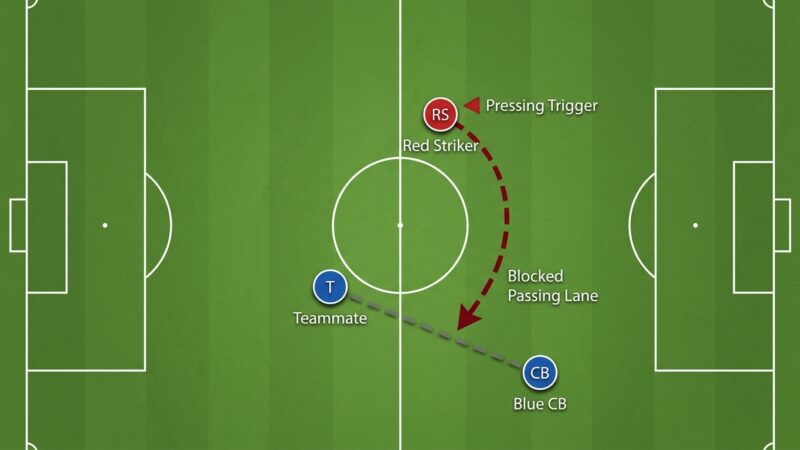
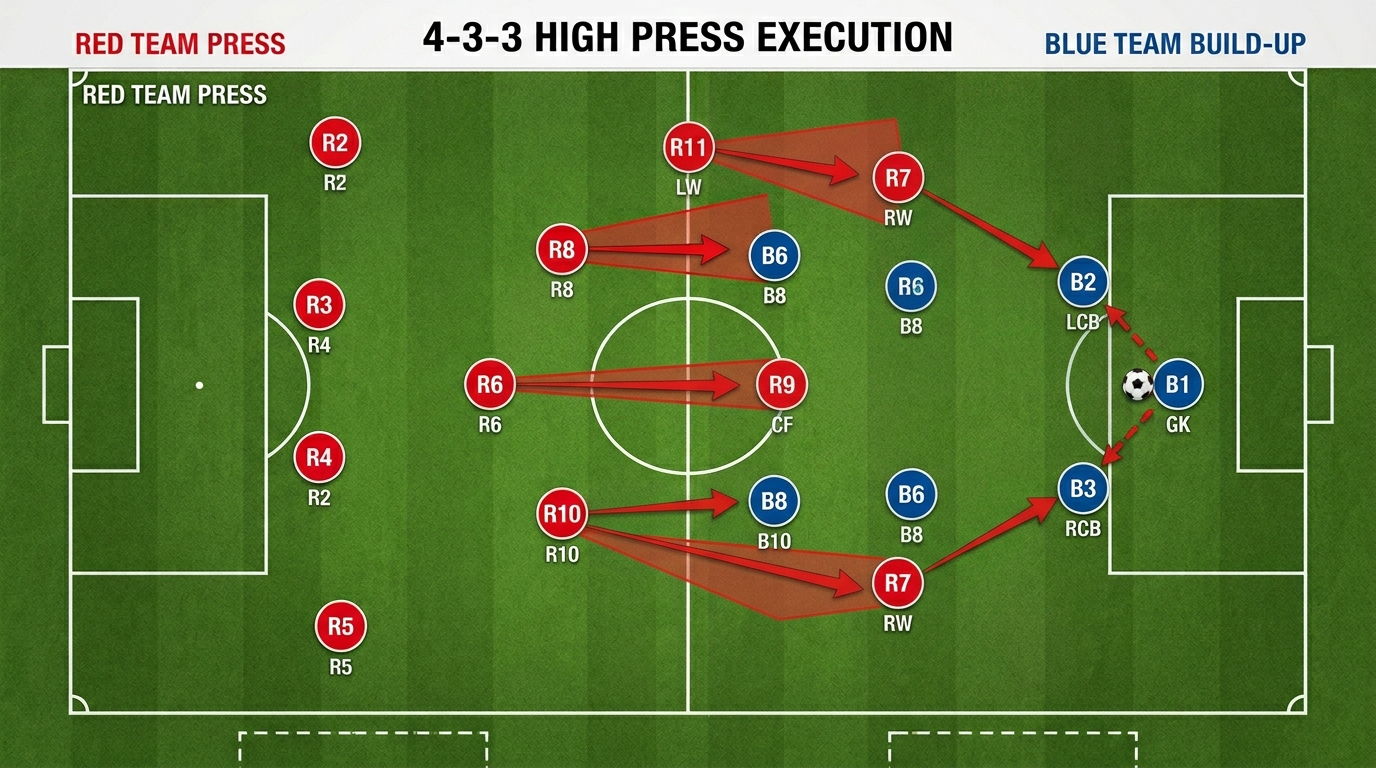
- Relentless Pressing: When possession is lost, teams execute an intense counter-press (pressing immediately after losing the ball) to win it back before the opponent can transition into an attack.
- Playing Out from the Back: Goalkeepers and center-backs act as playmakers. Long, hopeful clearances are strictly forbidden.
- Patient Build-Up: The team is willing to pass the ball backward or sideways to retain control and wait for the right opening.
Iconic Examples
- Spain National Team (2008–2012): Won three consecutive major international tournaments using a midfield-heavy, possession-dominant approach.
- Manchester City (Pep Guardiola Era): A modern evolution of positional play, utilizing inverted full-backs and high-pressing wingers to dominate the Premier League.
What is Counterattacking Football?
Counterattacking football is the art of the ambush. It is built on the understanding that an attacking team is most vulnerable in the exact moment they lose the ball. Why? Because they have pushed players forward, leaving vast, empty spaces behind their defensive line.
Counterattacking teams actively invite pressure. They are perfectly comfortable letting the opponent have 65% or even 70% of the ball. They defend resolutely, wait for a mistake, and strike with terrifying speed and precision.
The Core Philosophy
The philosophy here is efficiency over dominance. Space is the counterattacking team’s best friend. Rather than trying to pry open a dense, organized defense, they prefer to attack a disorganized defense that is sprinting backward. Verticality is key—the goal is to move the ball from back to front in the fewest passes possible.
Key Characteristics
- Low or Mid-Block: The team sets up a compact defensive shape, usually deep in their own half, denying the opponent space in dangerous central areas.
- Vertical Passing: Upon winning the ball, the first thought is always, “Can we play forward?” Long, sweeping passes over the top or into the channels are common.
- Explosive Pace: The forward line must consist of rapid runners who can exploit the space behind the opponent’s high defensive line.
- Aggressive Defending: While they sit deep, they must be aggressive in their tackles and interceptions within their designated defensive zones to trigger the break.
Iconic Examples
- Leicester City (2015–2016): Defied 5,000-to-1 odds to win the Premier League with less than 45% average possession, utilizing Jamie Vardy’s devastating pace.
- Inter Milan (2009–2010): Under Mourinho, they famously defeated Barcelona in the Champions League semi-final with incredibly disciplined, low-block defending and clinical counterattacks.
The Battle of Formations: How Tactics Shape the Pitch
Formations are not rigid rules, but they provide the framework for how a tactical philosophy is executed. Different setups naturally lend themselves to different styles of play.
Formations Favoring Possession
To dominate the ball, teams need triangles and passing options all over the pitch.
- 4-3-3: The gold standard for possession football. It provides natural triangles, width through the wingers, and a three-man midfield to control the center.
- 3-2-4-1 (or the “Box Midfield”): A modern Guardiola innovation. A center-back or full-back steps into the midfield, creating a box shape (four players) in the center of the pitch. This almost guarantees numerical superiority in midfield, making it impossible for the opponent to steal the ball.
Formations Favoring the Counter
To counterattack effectively, teams need defensive solidity and quick outlets.
- 4-4-2: The classic counterattacking shape. Two banks of four provide a solid defensive wall, while two strikers remain up top to immediately receive the ball and launch a counter.
- 5-3-2 / 3-5-2: Provides three central defenders to pack the penalty area and deal with crosses. The wing-backs provide defensive width but can explode forward as soon as possession changes hands.
Key Tactical Differences Breakdown
To truly understand the contrast between these styles, we need to look at how they handle the distinct phases of a football match.
1. Defensive Blocks and Engagement Lines
Possession Teams: They utilize a high block. Their “Line of Engagement” (the point on the pitch where they start actively pressing the opponent) is often right on the edge of the opponent’s penalty box. They want to squeeze the pitch and force errors high up.
Counterattacking Teams: They utilize a low or mid-block. Their Line of Engagement is usually around the halfway line or even deeper. They want to draw the opponent out, leaving space behind them to attack into.
2. Attacking Transitions
Possession Teams: When they win the ball back, if a quick counter is available, they will take it. But if the opponent is organized, they will immediately focus on ball retention. They transition into their attacking shape, spread out, and begin their patient build-up.
Counterattacking Teams: The attacking transition is their primary weapon. The moment the ball is won, players launch into synchronized, pre-rehearsed sprints. The ball is played vertically as quickly as possible. If the counterattack is stalled, they may even clear the ball and reset defensively rather than risk losing it in a dangerous area.
3. Defensive Transitions (Rest-Defence)
Possession Teams: Because they commit so many players forward, they are inherently vulnerable to counters. To combat this, they focus heavily on rest-defence—the structural positioning of the players who are not directly involved in the attack. If they lose the ball, they immediately swarm the player in possession (counter-pressing) to kill the counterattack at its source.
Counterattacking Teams: When they lose the ball, they rarely counter-press high up the pitch. Instead, they drop quickly back into their compact defensive shape to deny the opponent any space to exploit.
The Player Profiles: Building the Right Squad
You cannot play possession football with players built for a low block, and vice versa. Recruitment is heavily dictated by tactical philosophy.
Goalkeepers
- Possession: Requires a “Sweeper-Keeper” (e.g., Ederson, Manuel Neuer). They must be brilliant with their feet, capable of playing line-breaking passes under pressure, and quick to rush off their line to sweep up long balls behind the high defense.
- Counterattack: Requires a traditional “Shot-Stopper” (e.g., Jan Oblak, David de Gea). Their primary job is to command the penalty area, deal with an influx of crosses, and distribute quickly to launch breaks.
Defenders
- Possession: Center-backs must be “ball-playing defenders” comfortable stepping into midfield. Full-backs often need to be technically gifted enough to play as inverted midfielders.
- Counterattack: Center-backs are usually no-nonsense, physically dominant players who excel at blocking shots, making clearances, and winning aerial duels. Full-backs must have the stamina to sprint the length of the pitch rapidly.
Midfielders
- Possession: Needs a “Metronome” (e.g., Rodri, Sergio Busquets, Toni Kroos)—players who rarely lose the ball, have incredible spatial awareness, and dictate the tempo.
- Counterattack: Needs a “Destroyer” and a “Carrier.” They need a robust defensive midfielder to break up play (e.g., N’Golo Kanté) and a box-to-box engine who can carry the ball 40 yards up the pitch in seconds.
Attackers
- Possession: Often utilizes a “False 9” or technical wingers who drop deep to link play and create overloads in midfield.
- Counterattack: Requires absolute raw pace and directness. Strikers are often expected to run the channels, chase down lost causes, and finish ruthlessly, as they may only get one or two chances per game.
The Statistical Reality: Does Possession Win Games?
It is a common misconception that having more possession equals dominating a game. In the modern era of football analytics, clubs look far beyond basic possession percentages.
Data analysts use a metric called Field Tilt, which measures the share of final-third passes a team has compared to their opponent. A team might only have 40% overall possession, but if they have 60% of the game’s final-third passes, they are arguably dominating the dangerous areas of the pitch.
Another crucial metric is PPDA (Passes Per Defensive Action). This measures how intensely a team presses. Possession teams usually have a very low PPDA (meaning they allow very few passes before making a tackle or interception), while counterattacking teams have a high PPDA.
Ultimately, statistics prove that both styles win titles. Real Madrid won the 2022 Champions League while frequently having less possession than their knockout-stage opponents, relying on lethal transitions and individual brilliance. Conversely, Manchester City’s domestic dominance is built on recording 65%+ possession week in and week out.
The Hybrid Era: Why Modern Teams Do Both
As football tactics evolve, the line between possession and counterattacking teams is blurring. The best teams in the world are no longer one-dimensional; they are hybrids.
Take Jürgen Klopp’s Liverpool, for example. In his early days, Klopp relied entirely on Gegenpressing (heavy-metal counter-pressing) and lightning-fast transitions. However, as teams began to sit deep against Liverpool, refusing to give them space to run into, Klopp had to evolve. Liverpool learned how to dominate possession and break down low blocks, while still retaining their lethal counterattacking threat when the opportunity arose.
Today’s elite managers understand that you need possession to control the lesser teams, but you need devastating counterattacking abilities to exploit the spaces left by other top-tier teams.
Frequently Asked Questions (FAQs)
1. Which tactical style is harder to coach?
Generally, possession-based football is considered harder to coach from scratch. It requires a high level of technical proficiency across all 11 players, complex positional understanding, and synchronized pressing triggers. Counterattacking relies more on defensive organization and physical speed, which can often be implemented more quickly.
2. Can an underdog team successfully play possession football?
Yes, but it is highly risky. Playing out from the back against a superior team with elite pressers often leads to dangerous turnovers near your own goal. Underdogs like Brighton & Hove Albion have successfully implemented possession styles, but it requires brilliant coaching and total player buy-in.
3. What is “rest-defence” in football tactics?
Rest-defence refers to the structure and positioning of the attacking team’s defensive players while they have the ball. Good rest-defence ensures that if the ball is lost, the team is mathematically and structurally secure against a quick counterattack.
4. Why do counterattacking teams use a “low block”?
A low block involves dropping the defensive and midfield lines deep into your own half. This purposefully removes the space behind the defense, preventing fast opposition attackers from running in behind. It forces the opponent to try and play through a densely packed area.
5. How do you defeat a team that only plays counterattack?
Beating a counterattacking team requires immense patience. You must circulate the ball quickly to shift their defensive block, avoid losing the ball in central areas, and ensure your rest-defence is perfect. Often, scoring an early goal forces the counterattacking team to abandon their low block, opening up the game.
Conclusion
The tactical battleground of football is what makes the sport endlessly fascinating. The slow, methodical suffocation of possession-based football and the thrilling, visceral strike of a counterattack offer two completely different viewing experiences.
Possession teams demand technical perfection, spatial domination, and proactive defending. Counterattacking teams thrive on defensive resilience, explosive transitions, and ruthless efficiency. As the modern game continues to evolve into a hybrid era, the most successful teams are those that can seamlessly transition between controlling the ball and exploiting the space.
Understanding these tactics doesn’t just make you a smarter fan; it transforms every match from a simple game of kicking a ball into a high-speed, high-stakes game of strategic warfare.
Want to dive deeper into the beautiful game? Explore our tactics section to break down player roles, analyze historical formations, and learn how to read the game like a professional manager. Check out our latest articles and join the tactical discussion today!

My name is Jeferson, a passionate football enthusiast and the creator of this portal dedicated to fans of the world’s most popular sport. My goal is to provide reliable information, up-to-date news, match analysis, transfer updates, tournament coverage, and everything happening both on and off the pitch.