The Return of the Traditional Number 9 in Modern Football
|
Getting your Trinity Audio player ready... |
Just a decade ago, football pundits and tactical analysts were actively preparing the obituary for the traditional number 9.
In a world mesmerized by tiki-taka, fluid formations, and the mesmerizing brilliance of Lionel Messi operating as a “False 9,” the classic, physical, box-dwelling center-forward seemed like a relic of a bygone era. Managers demanded constant movement, midfield overloads, and intricate passing networks. The big man up top, whose sole job was to put the ball in the back of the net, was suddenly deemed a tactical liability.
But football is cyclical. As defenses adapted to possession-based systems, managers realized that intricate passing isn’t always enough to break down a resolute defense. Today, we are witnessing a thrilling tactical renaissance. The traditional number 9 has returned to the apex of the beautiful game, bigger, faster, and more ruthless than ever before.
From Erling Haaland shattering Premier League records to Victor Osimhen conquering Italy, the target man is officially back. In this article, we will explore why the classic striker faded away, the tactical shifts that brought them back, and how today’s goalscorers have evolved to dominate modern football.
What is a Traditional Number 9?
Before diving into their modern resurgence, we must first understand what makes a “traditional” number 9. Historically, this jersey number was handed to the team’s primary goalscorer—the spearhead of the attack.
While players like Diego Maradona or Pelé wore the number 10 and operated as creative playmakers, the number 9 was the ultimate finisher.
Core Characteristics of the Classic Striker
- Physical Presence: They possess the strength to hold off burly center-backs, shield the ball, and bring teammates into play.
- Aerial Dominance: A classic 9 thrives on crosses, turning half-chances into goals with towering headers.
- Poacher’s Instinct: They have an uncanny ability to be in the right place at the right time inside the penalty area.
- Off-the-Shoulder Movement: They constantly play on the edge of the offside trap, looking to break behind the defensive line.
Think of legends like Alan Shearer, Gabriel Batistuta, or Filippo Inzaghi. They weren’t always involved in the intricate build-up play, but when the ball entered the box, they came alive.
The Rise and Fall of the False 9
To understand the return of the traditional number 9, we must examine why they disappeared in the first place. The shift began in the late 2000s and early 2010s, largely spearheaded by Pep Guardiola’s Barcelona and the Spanish national team.
The Guardiola Revolution
Guardiola realized that by removing a traditional striker and deploying a creative midfielder (like Messi or Cesc Fàbregas) in the center-forward position, he could create overwhelming numerical advantages in midfield.
This player—the “False 9″—would drop deep, pulling opposing center-backs out of position. If the defenders followed, it left gaping holes for wingers to exploit. If the defenders stayed back, the False 9 had the time and space to dictate play.
The Era of Possession
During this era, possession was king. A traditional striker who touched the ball only 15 times a game was viewed as a wasted position on the pitch. Managers wanted 11 players who could pass, press, and rotate fluidly.
By the time Spain won Euro 2012 without playing a recognized striker in the final, the footballing world was convinced: the traditional number 9 was dead.
Why the Traditional Number 9 is Making a Comeback
As the famous tactical adage goes, every action in football causes a reaction. The dominance of possession-based, False 9 systems forced defending teams to adapt. This adaptation is what ultimately paved the way for the return of the classic striker.
1. Breaking Down the Low Block
To counter teams that dominated possession, underdogs began employing extreme “low blocks.” Teams would pack eight, nine, or even ten players behind the ball, sitting incredibly deep in their own penalty area.
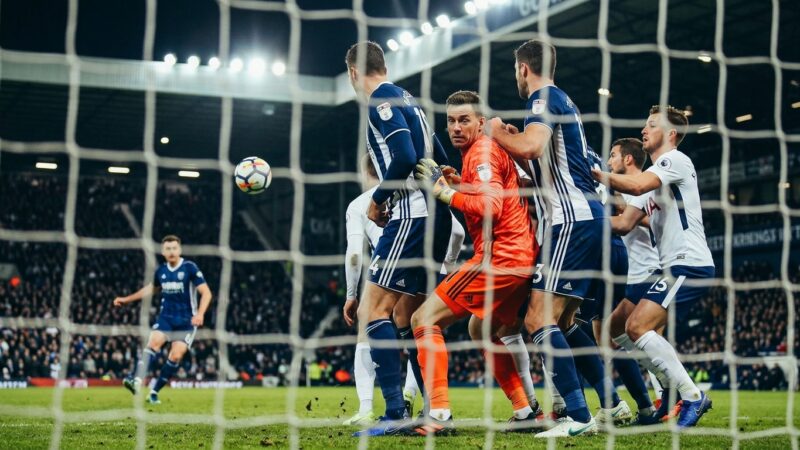
When a defense refuses to push up, the False 9 becomes ineffective. There is no space behind the defense for wingers to exploit, and the midfield is too congested for intricate passing. To break down a low block, you need a physical focal point—a traditional number 9 who can wrestle with center-backs, attack crosses, and cause chaos in a crowded penalty area.
2. The Resurgence of Crossing
With the middle of the pitch heavily congested, modern attacks are increasingly funneled out wide. Full-backs and wing-backs like Trent Alexander-Arnold and Reece James have become the primary playmakers for top teams.
However, elite crossing is useless if there is no one in the box to finish the chance. The return of the traditional striker provides a much-needed target for these wide deliveries, turning sterile possession into high-quality scoring opportunities.
3. The Need for an Out-Ball
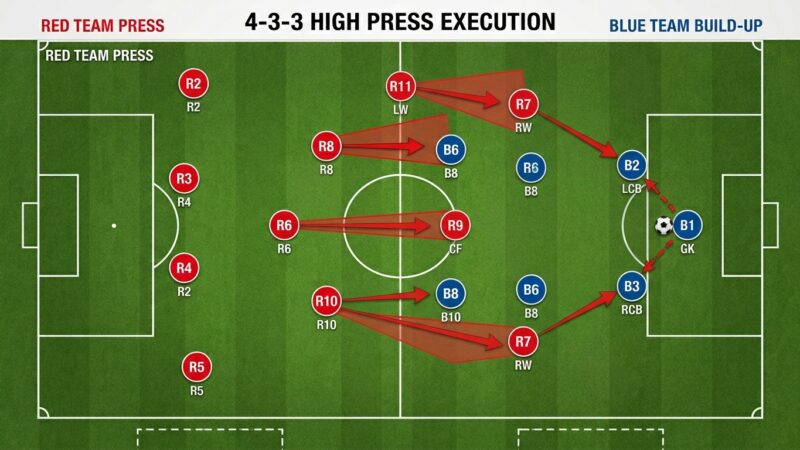
Modern football is defined by high-intensity, aggressive pressing. Teams hunt in packs to win the ball back high up the pitch.
When a team is suffocated by a high press, trying to pass out from the back can be suicidal. Having a strong, traditional number 9 offers a reliable “out-ball.” A goalkeeper or defender can bypass the press by launching the ball long to the striker, who can control it with their chest, hold off a defender, and allow their team to transition up the pitch safely.
The Erling Haaland Paradigm Shift
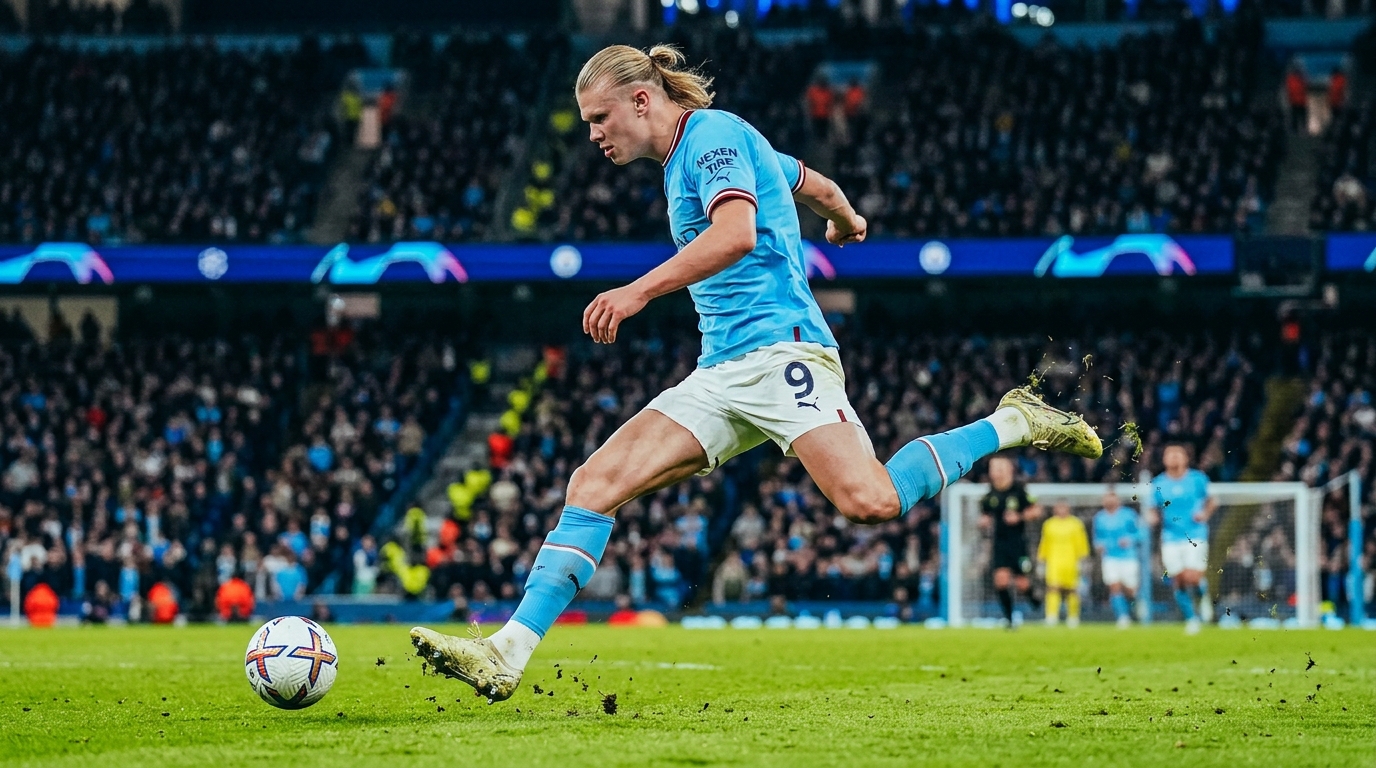
No player embodies the return of the traditional number 9 quite like Erling Haaland. His arrival at Manchester City in 2022 marked a massive tactical shift for Pep Guardiola—the very man who popularized the False 9.
The Missing Piece of the Puzzle
For years, Manchester City dominated English football without a recognized striker, playing beautiful, intricate football. Yet, they repeatedly fell short in the UEFA Champions League. When matches became chaotic or when facing elite low blocks, City lacked a ruthless edge.
Enter Haaland. Standing at 6-foot-4, boasting Olympic-level sprinting speed, and possessing a terrifying instinct for goal, Haaland changed everything. He didn’t need to touch the ball 50 times a match. He rarely involved himself in City’s midfield passing triangles. Instead, he occupied center-backs, stretched defensive lines, and finished chances with devastating efficiency.
The result? Haaland broke the Premier League single-season scoring record and fired Manchester City to a historic treble, including that elusive Champions League trophy. Guardiola’s adaptation proved that even the most purist possession systems need a traditional number 9 to reach perfection.
Top Players Leading the Number 9 Renaissance
Haaland is not alone. Across Europe’s top leagues, a new generation of physical, out-and-out strikers is dominating the goalscoring charts.
Victor Osimhen
The Nigerian talisman was the driving force behind Napoli’s historic Serie A title win in 2023. Osimhen is a pure, athletic 9. His ability to leap above defenders, attack the space behind high defensive lines, and finish powerfully makes him a nightmare to mark.
Darwin Núñez
Liverpool’s Uruguayan forward represents Jurgen Klopp’s shift away from the False 9 system (previously mastered by Roberto Firmino). Núñez brings raw pace, power, and an element of chaos. He is a traditional target man whose constant running stretches opposition defenses to their breaking point.
Alexander Isak
Operating for Newcastle United, Isak combines the classic traits of a traditional number 9 with modern technical grace. He has the height to win aerial duels but possesses the dribbling ability of a winger, making him a highly versatile focal point in the Premier League.
Dusan Vlahovic
The Juventus striker is a throwback to the classic Balkan number 9s. Left-footed, physically imposing, and clinical inside the box, Vlahovic thrives on early crosses and balls played directly into his feet.
How the “New” Number 9 Differs from the Old
While the traditional striker has returned, the role has evolved. A manager in the modern era cannot afford to carry a “luxury player” who only stands in the penalty box waiting for service. The modern traditional 9 is a hybrid beast.
High-Intensity Pressing
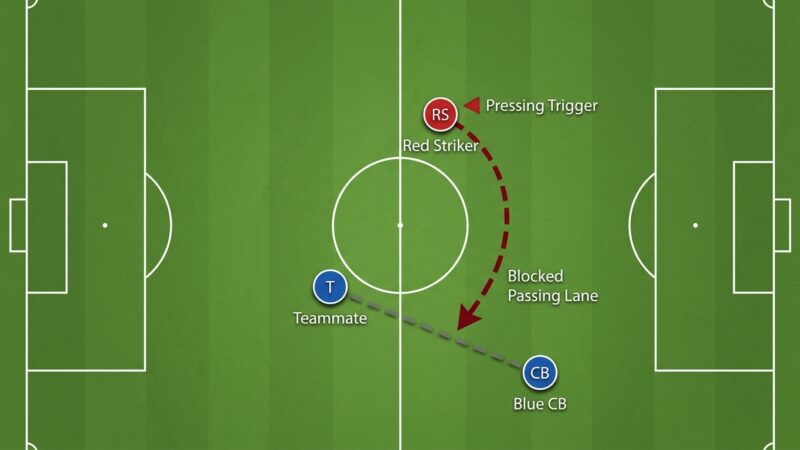
The modern striker is the first line of defense. Players like Haaland and Núñez are expected to trigger the team’s pressing traps. They must sprint relentlessly to close down opposition goalkeepers and center-backs, forcing turnovers in dangerous areas.
Link-Up Play and Fluidity
While their primary job is to score, today’s number 9s are far more technically proficient than their predecessors. They must be comfortable dropping slightly deeper to play one-touch combinations with incoming wingers.
Supreme Athleticism
The physical demands of modern football are unprecedented. Today’s center-forwards must have the strength of a traditional target man combined with the acceleration of a winger. The spaces in modern football close in a fraction of a second; strikers must possess explosive pace to capitalize on defensive errors.
Formations Adapting to the Pure Striker
The tactical frameworks supporting these players have also shifted. For years, the 4-3-3 with a False 9 was the gold standard. Today, we are seeing managers adapt their systems to get the best out of their big men.
- The 4-2-3-1: This formation has surged in popularity because it perfectly supports a lone striker. With a dedicated “Number 10” playing right behind them and two wingers providing service, the number 9 is never isolated.
- The 3-5-2 / 3-4-2-1: Managers like Antonio Conte and Simone Inzaghi have used three-at-the-back systems to partner a traditional big man with a quicker, secondary striker (e.g., Romelu Lukaku and Lautaro Martínez at Inter Milan). This classic “big man, small man” dynamic has proven highly effective in modern Serie A and the Premier League.
The Future of the Striker Position
As we look to the future, it is clear that the traditional number 9 is here to stay. Football academies across the globe, which spent the last decade trying to produce the next Lionel Messi or Andres Iniesta, are once again hunting for tall, powerful, goal-obsessed center-forwards.
However, tactical evolution never stops. The next iteration of the striker might blend the line-breaking runs of a traditional 9 with the deep-lying playmaking of a False 9. Harry Kane at Bayern Munich is perhaps the perfect current example of this ultimate hybrid—a player capable of winning the Golden Boot while simultaneously leading his league in assists.
Regardless of how the role continues to adapt, one thing is certain: the thrill of seeing a powerful number 9 burst through a defense and smash the ball into the back of the net will never go out of style.
Frequently Asked Questions (FAQ)
1. What is the difference between a traditional Number 9 and a False 9? A traditional number 9 plays high up the pitch, stays central, battles physically with center-backs, and focuses primarily on scoring. A False 9 is usually a creative midfielder operating in the striker position; they drop deep into the midfield to help keep possession and pull defenders out of position, allowing wingers to score.
2. Why did managers stop using traditional strikers for a few years? During the late 2000s and 2010s, possession-based football (like Barcelona’s tiki-taka) dominated. Managers preferred playing with an extra midfielder (a False 9) to control the game rather than keeping a static player up top who rarely touched the ball.
3. Who is considered the best traditional Number 9 in the world right now? Currently, Erling Haaland is widely regarded as the best traditional number 9 in world football. His record-breaking goalscoring feats for Manchester City and his physical, direct style perfectly embody the modern resurgence of the classic striker role. Other elite names include Victor Osimhen, Harry Kane, and Robert Lewandowski.
4. Are two-striker formations making a comeback? Yes, to an extent. While the lone striker remains dominant in 4-3-3 and 4-2-3-1 systems, many teams are utilizing 3-5-2 formations. This allows a traditional, physical number 9 to play alongside a quicker, more agile forward, creating a highly effective strike partnership.
5. Do modern number 9s have to defend? Absolutely. In modern football, the striker is the first line of defense. They are expected to lead the team’s pressing structure, cut off passing lanes, and tirelessly harass opposition defenders to force mistakes. The days of strikers walking around the pitch while their team defends are effectively over.
Conclusion
The death of the traditional number 9 was greatly exaggerated. While the footballing world spent a decade enchanted by False 9s and midfield overloads, the tactical pendulum has swung back. Faced with stubborn low blocks and high-intensity pressing, managers have rediscovered the value of a physical, ruthless, and direct center-forward.
Players like Erling Haaland and Victor Osimhen have proven that no matter how sophisticated football tactics become, there is no substitute for a player who can simply bully a defense and put the ball in the back of the net. The modern number 9 has evolved, adding elite pressing and technical link-up play to their arsenal, making them more complete—and more dangerous—than ever before.
Did you enjoy this deep dive into football tactics? Explore our tactics section for more articles, and let us know in the comments who you think the greatest number 9 of all time is. Don’t forget to subscribe to our newsletter for weekly football analysis delivered straight to your inbox!

My name is Jeferson, a passionate football enthusiast and the creator of this portal dedicated to fans of the world’s most popular sport. My goal is to provide reliable information, up-to-date news, match analysis, transfer updates, tournament coverage, and everything happening both on and off the pitch.