Football Legends Who Changed the Way the Game Is Played
|
Getting your Trinity Audio player ready... |
Football is far more than a simple game of 22 players chasing a ball across a pitch. It is a constantly evolving tactical chess match. Across the decades, managers have drawn up complex systems to gain an edge, but tactics are nothing without the personnel to execute them. Every so often, a player steps onto the grass who doesn’t just master the current system—they completely shatter it.
These are the visionaries. The rule-breakers. The pioneers.
While history books are filled with players who scored the most goals or lifted the most trophies, true immortality belongs to those who altered the very geometry of the sport. From goalkeepers who decided the penalty area wasn’t big enough, to midfielders who invented entirely new positions, these icons forced managers, opponents, and fans to rethink what was possible on a football pitch.
Whether you are a lifelong supporter who analyzes every tactical shift, or a casual fan who just loves the beautiful game, understanding these pioneers is essential. Let’s dive into the fascinating history of the football legends who changed the way the game is played.
5. Main Content
The Architects of Tactical Revolution
To understand modern football, you have to look back at the players who first realized that positions on a pitch are just starting points, not cages.
Johan Cruyff and the Birth of “Total Football”
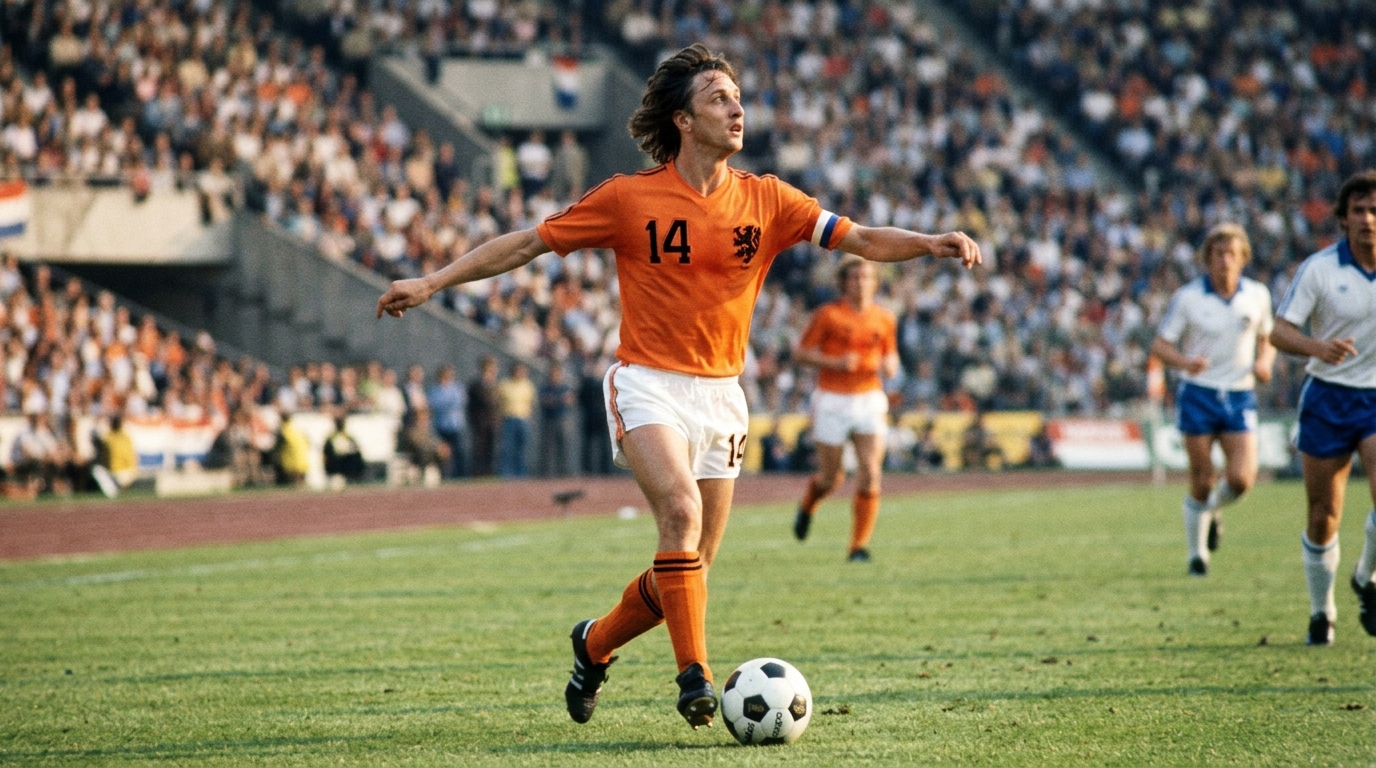
You cannot write about football legends who changed the game without starting with Hendrik Johannes Cruyff. In the 1970s, playing for Ajax and the Netherlands national team under manager Rinus Michels, Cruyff became the on-pitch conductor of Total Football (Totaalvoetbal).
Before Cruyff, football was highly rigid. Defenders defended, midfielders passed, and attackers waited for the ball. Cruyff blew that concept out of the water. Total Football relied on the idea that any outfield player could seamlessly take over the role of any other player on the pitch.
- Fluidity Over Rigidity: If a defender moved forward, a midfielder dropped back to cover.
- Space Manipulation: Cruyff was famously obsessed with space. He directed his teammates on where to run, dragging defenders out of position to create attacking avenues.
- The “Cruyff Turn”: Beyond tactics, he introduced a level of technical flair that baffled defenders, most notably with the “Cruyff Turn” at the 1974 World Cup—a move that is now taught to children globally.
Cruyff’s philosophy didn’t end when he retired. He took his ideas to Barcelona, laying the foundational DNA for the club’s famed La Masia academy, which eventually produced Pep Guardiola, Xavi, and Lionel Messi.
Franz Beckenbauer: Inventing the Attacking Libero
While Cruyff was revolutionizing the attack, his great rival Franz Beckenbauer was doing the exact same thing for the defense. Known as Der Kaiser (The Emperor), Beckenbauer popularized and perfected the role of the attacking libero, or sweeper.
In the 1960s and 70s, central defenders had one job: stop the opposing striker and clear the ball as far away as possible. Beckenbauer looked at that role and saw a wasted opportunity.
Positioned behind the main defensive line, Beckenbauer used his supreme technical ability and vision to read the game defensively. But when he intercepted the ball, he didn’t just clear it. He carried it forward.
Why Beckenbauer’s Role Was Revolutionary:
- Creating Overloads: By stepping out of the defense with the ball, he created a numerical advantage in midfield.
- Elite Passing: He possessed the passing range of a world-class playmaker, launching attacks from the deepest areas of the pitch.
- The Blueprint for the Modern Center-Back: Today, managers like Jurgen Klopp and Mikel Arteta demand that central defenders be comfortable on the ball and capable of starting attacks. Beckenbauer was doing this half a century ago.
Redefining Positions on the Pitch
As the game evolved, specific areas of the pitch became battlegrounds where individual brilliance forced systemic changes.
Lev Yashin: The Original Sweeper-Keeper
Goalkeepers are often isolated from the tactical discussions of outfield players, but Lev Yashin, the “Black Spider,” changed what it meant to be a number one.
Before Yashin’s prime in the 1950s and 60s, goalkeepers rarely left their goal line. They were reactive shot-stoppers. Yashin, who spent his entire career at Dynamo Moscow, transformed the position into a proactive one.
He was the first goalkeeper to consistently rush off his line to intercept crosses, close down advancing strikers, and act as an extra defender. He was also a pioneer in quick distribution, throwing the ball rapidly to his fullbacks to launch counter-attacks, rather than blindly punting it up the field.
To this day, Yashin remains the only goalkeeper in history to win the Ballon d’Or (1963). Every time you see modern keepers like Manuel Neuer or Ederson acting as an 11th outfield player, you are watching the evolution of Lev Yashin’s original blueprint.
Claude Makélélé: The Man Who Got His Own Position
It is incredibly rare for a player to be so definitive in their style of play that an entire position is named after them. Enter the “Makélélé Role.”
In the early 2000s, Real Madrid controversially sold Claude Makélélé to Chelsea. Real Madrid’s president famously dismissed his departure, claiming Makélélé rarely passed the ball more than three meters and lacked technical flair. It was a historic miscalculation.
Makélélé didn’t care about scoring goals or playing flashy through-balls. He sat directly in front of the defensive line and acted as a tactical shield.
The Makélélé Impact:
- Killing the Traditional #10: By occupying the space between the midfield and the defense, Makélélé effectively neutralized traditional playmakers.
- Unlocking Attackers: Because Makélélé single-handedly secured the defense, fullbacks and attacking midfielders had the absolute freedom to push forward without fear of being caught on the counter-attack.
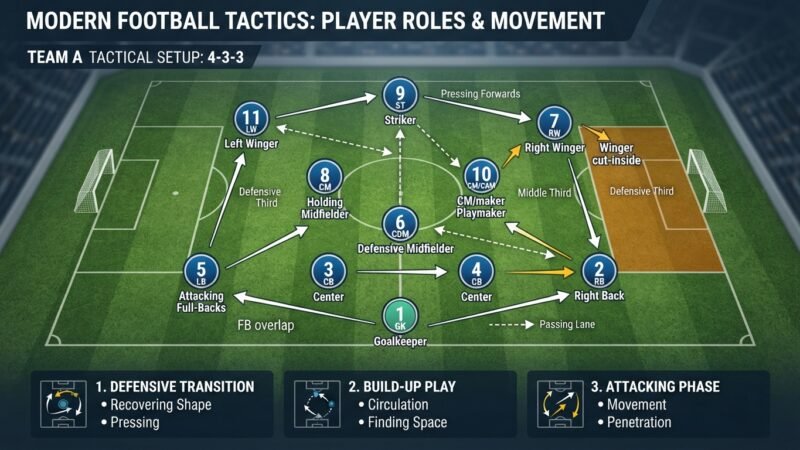
- The Shift to 4-3-3: His dominance forced teams to abandon the traditional 4-4-2 formation in favor of a 4-3-3 or 4-2-3-1, relying on a dedicated defensive pivot. N’Golo Kanté, Casemiro, and Rodri all owe a debt of gratitude to Makélélé’s pioneering discipline.
Roberto Carlos & Philipp Lahm: The Fullback Evolution
For a long time, the fullback was considered the least important player on the pitch. They were simply wide defenders who occasionally offered a cross. Two players, in very different ways, changed this narrative.
Roberto Carlos: The Brazilian left-back turned the position into a lethal attacking weapon. With his boundless stamina, blistering pace, and physics-defying left foot, Roberto Carlos essentially played as a defender and a winger simultaneously. He forced opposing teams to deploy wingers just to defend against him, completely flipping the tactical script.
Philipp Lahm: A generation later, under the guidance of Pep Guardiola at Bayern Munich, Philipp Lahm redefined the fullback via intelligence rather than sheer physical dominance. Lahm became the prototype for the “inverted fullback.” Instead of overlapping down the touchline, Lahm would step inside into central midfield when his team had the ball. This revolutionized possession football, allowing teams to dominate the center of the park while opening up passing lanes out wide.
Attackers Who Broke the Mold
Strikers and wingers are historically the glory-hunters of football. But a few icons changed how goals were created and scored.
Lionel Messi and the Perfection of the False Nine
While Lionel Messi has broken nearly every record in football through pure, unadulterated genius, his most significant tactical contribution came when Pep Guardiola moved him from the right wing into the center of the attack in 2009.
However, Messi didn’t play as a traditional striker. He played as a “False Nine.”
Instead of standing shoulder-to-shoulder with big central defenders, Messi would drop deep into the midfield to receive the ball. This created a nightmare scenario for the opposition:
- The Defender’s Dilemma: If a center-back followed Messi into midfield, it left a massive gap in the defense for wingers (like Thierry Henry or Pedro) to exploit.
- The Midfield Overload: If the center-backs stayed put, Messi found himself in acres of space in midfield, allowing Barcelona to easily outnumber and out-pass their opponents.
While players like Matthias Sindelar and Nandor Hidegkuti experimented with dropping deep decades earlier, Messi perfected the role to such a devastating degree that the False Nine became the most feared tactical weapon of the 21st century.
Cristiano Ronaldo: The Inverted Goal Machine
Cristiano Ronaldo’s evolution fundamentally changed what we expect from wide players. Historically, a winger’s job was to run down the outside of the pitch and cross the ball to a central striker (think David Beckham or Ryan Giggs).
Ronaldo, alongside his contemporary Arjen Robben, popularized the “inverted winger” or “inside forward.” Playing on the left wing despite being right-footed, Ronaldo rarely crossed the ball from the touchline. Instead, he relentlessly cut inside toward the penalty area to shoot.
By starting wide, Ronaldo isolated fullbacks who were rarely equipped to deal with his aerial ability or shooting power. He proved that a team’s primary goalscorer didn’t need to be a traditional number nine, forever changing the attacking frameworks of elite European football.
The Midfield Maestros
Xavi and Andrés Iniesta: The Tiki-Taka Twins
Physicality dominated the midfield in the late 1990s and early 2000s. You needed towering box-to-box players like Roy Keane or Patrick Vieira to win the physical battle.
Xavi Hernández and Andrés Iniesta, standing at 5’7″ (1.70m) and 5’7″ respectively, proved that the brain could easily conquer the brawn.
They were the engine room of Barcelona and Spain’s “Tiki-Taka” era—a style built on relentless short passing, positional rotation, and maintaining possession. They changed the game by proving that defending didn’t require tackling; it simply required keeping the ball. If the opponent doesn’t have the ball, they cannot score. Xavi and Iniesta’s geometry, spatial awareness, and passing carousels forced every youth academy in the world to prioritize technical intelligence over physical stature.
Andrea Pirlo: The Deep-Lying Playmaker
Traditionally, your most creative passer was placed high up the pitch as a “Number 10.” Andrea Pirlo changed this dynamic by operating as a regista (director) positioned just in front of his own defense.
Surrounded by combative midfielders (like Gennaro Gattuso at AC Milan) who did the dirty work of tackling, Pirlo acted as football’s equivalent to an NFL quarterback. By operating so deep, he escaped the high-pressure marking usually reserved for attacking midfielders. From the base of the midfield, Pirlo dictated the tempo of the entire game, launching laser-accurate long balls that turned defense into attack in the blink of an eye.
6. FAQ Section
Q1: What is a “False Nine” in football? A False Nine is a center-forward who frequently drops deep into the midfield rather than staying high up the pitch against the central defenders. This movement drags defenders out of position, creates numerical advantages in midfield, and opens up space for wide forwards to run into. Lionel Messi is the most famous modern example.
Q2: How did the Makélélé role change modern formations? Before Claude Makélélé, teams predominantly used a 4-4-2 formation with two central midfielders expected to both attack and defend. Makélélé’s mastery of the strictly defensive midfield role allowed teams to switch to a 4-3-3 or 4-2-3-1, relying on one dedicated defensive anchor to protect the backline while giving creative players ultimate freedom.
Q3: What is the difference between a traditional goalkeeper and a sweeper-keeper? A traditional goalkeeper stays close to their goal line, focusing purely on shot-stopping and handling crosses. A sweeper-keeper, pioneered by Lev Yashin and modernized by Manuel Neuer, rushes outside the penalty area to clear through-balls, acts as a passing option for defenders, and actively helps start counter-attacks.
Q4: Did Johan Cruyff invent Total Football? While Johan Cruyff was the on-pitch orchestrator and the most famous face of Total Football, the tactical system was largely devised by his manager, Rinus Michels. Cruyff, however, was the genius who executed it and later evolved it as a manager himself.
Q5: What makes an “inverted fullback” different from a standard fullback? A standard fullback stays wide on the edges of the pitch, making overlapping runs down the touchline to provide crosses. An inverted fullback, a tactic popularized by Pep Guardiola using players like Philipp Lahm, tucks inside into the central midfield when their team has possession. This creates passing overloads in the center and protects against counter-attacks.
7. Conclusion
Football is an endlessly fascinating sport precisely because it never stops evolving. The football legends who changed the way the game is played didn’t just have extraordinary talent; they had the vision to see spaces, angles, and opportunities that no one else could.
From Franz Beckenbauer turning defense into an art form, to Johan Cruyff making the pitch fluid, to Claude Makélélé proving that destruction is just as valuable as creation, these players left a permanent imprint on the tactical landscape. Today’s modern superstars are walking down the paths that these pioneers carved out for them decades ago.
As the game continues to grow faster and more analytical, we can only wonder: who will be the next legend to step onto the pitch and force us to tear up the rulebook all over again?
Loved diving into the tactical history of football? Don’t stop here! Explore our tactical analysis hub to see how today’s top managers are using these historic concepts to dominate the Premier League and Champions League. Click here to read our latest football deep dives!

My name is Jeferson, a passionate football enthusiast and the creator of this portal dedicated to fans of the world’s most popular sport. My goal is to provide reliable information, up-to-date news, match analysis, transfer updates, tournament coverage, and everything happening both on and off the pitch.