Europa League vs Conference League: Format, Qualification and Main Differences
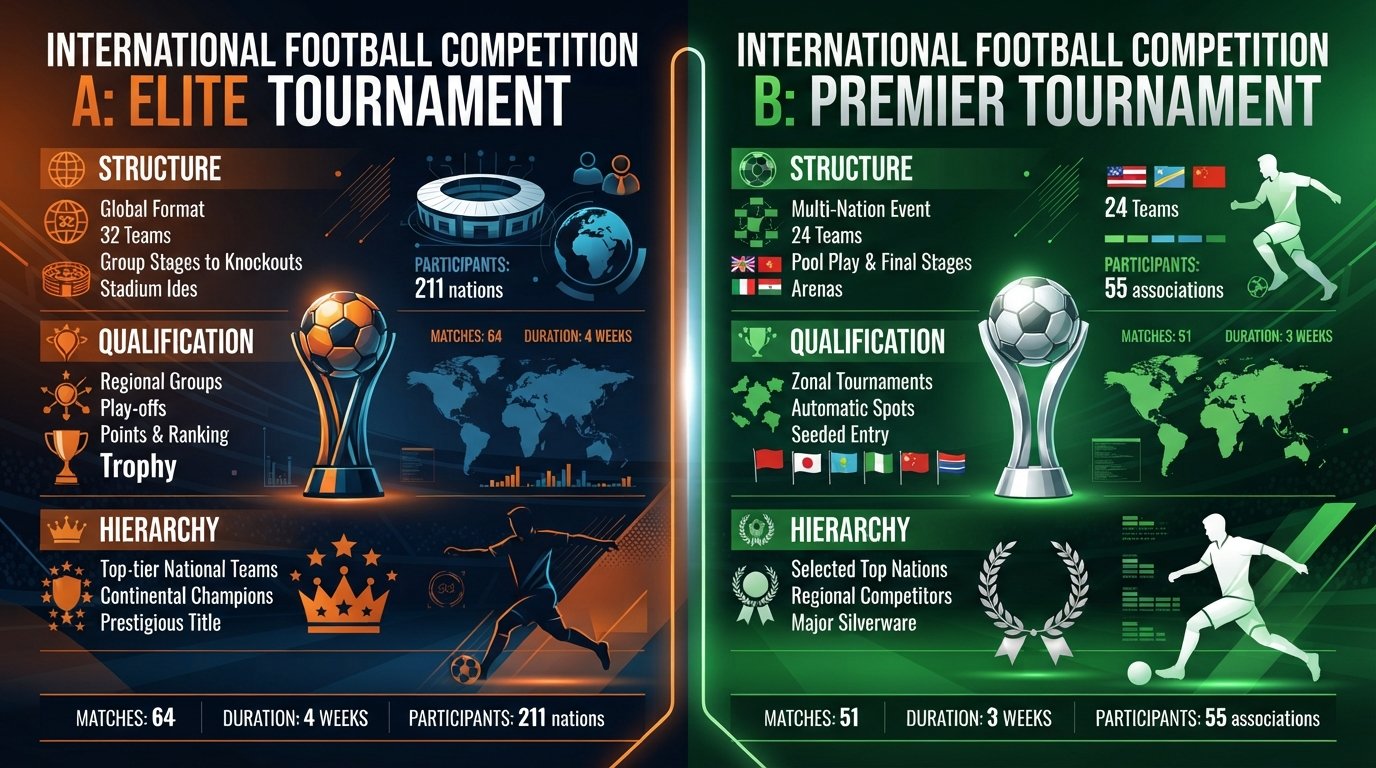
The UEFA Europa League and UEFA Conference League are both major European club competitions, but they are not interchangeable versions of the same tournament. They sit on different access levels, offer different league-phase schedules and give their winners different routes into the following season’s UEFA competitions. The simplest summary is this: the Europa League is the higher-tier competition, while the Conference League broadens European football to clubs from more national associations.
This guide explains the modern format, qualification routes and sporting consequences without relying on outdated “group stage” descriptions. UEFA replaced the traditional group stage with a single league phase in 2024/25. Rules and access positions can change from one season to the next, so the examples below use the current 2026/27 framework and should be checked against UEFA’s
The short answer: what is the main difference?
The Europa League generally receives clubs that finish higher in their domestic competitions or drop down from the Champions League. The Conference League is the next access layer, giving more associations and clubs a realistic route into a UEFA league phase. That does not make Conference League matches unimportant.
It means the competitions have different entry points, different opponent pools and different rewards.
Once the league phase begins, both tournaments use the same basic ladder. There are 36 clubs. The top eight qualify directly for the round of 16.
Clubs finishing ninth to 24th enter a knockout phase play-off, while clubs in 25th place or lower are eliminated from Europe. A low finish is no longer rescued by automatic movement into a lower competition after the league phase.
| Feature | Europa League | Conference League |
|---|---|---|
| League-phase field | 36 clubs | 36 clubs |
| League-phase matches per club | Eight: four home and four away | Six: three home and three away |
| Direct route to round of 16 | Places 1–8 | Places 1–8 |
| Knockout play-off places | Places 9–24 | Places 9–24 |
| Winner’s next-season reward | Champions League league phase, if not already qualified domestically | Europa League league phase, if not already qualified for the Champions League or Europa League |
UEFA’s official explanation of the three league phases confirms the match split and progression rules: the Europa League uses eight opponents, while the Conference League uses six, with both competitions following the same 36-club ranking structure. The How the Europa League format works In the Europa League league phase, each club plays eight different opponents. Four fixtures are at home and four are away. The draw uses pots and restrictions designed to distribute opponents rather than create a conventional eight-team group in which every club meets the same rivals twice. Results are combined into one table, so a club’s final ranking depends on its points, goal difference and the applicable UEFA tie-break procedures. The top eight avoid an extra knockout round and move straight to the last 16. Positions nine through 24 are paired in the knockout phase play-offs. The winners join the top eight in the round of 16, after which the competition proceeds through two-legged ties in the round of 16, quarter-finals and semi-finals before a one-match final. In practical terms, finishing near the top is valuable twice: it improves the draw position and removes two high-pressure play-off matches. For the 2026/27 season, UEFA describes a 36-team field built from automatic entrants, Europa League play-off winners and clubs transferring from the Champions League qualifying process. The exact balance can be reallocated when titleholders also qualify through their domestic position, which is why a club’s apparent “place” in a national league is never enough on its own to identify the eventual European competition. The Conference League uses the same 36-club league-phase concept but gives each side six different opponents: three at home and three away. That produces fewer league-phase fixtures than the Europa League, a meaningful difference for squads balancing domestic football, travel and European matchdays. The ranking thresholds are familiar. Places one to eight reach the round of 16 automatically, places nine to 24 play a two-leg knockout phase play-off, and places 25 to 36 leave the competition. The subsequent route is also a straight knockout competition, ending in a single final. Because the league phase is shorter, a club cannot assume it has time to recover from a slow start; each result represents a larger share of its schedule. All 36 clubs in the current Conference League framework reach the league phase through qualifying routes rather than direct domestic entry to the league phase. UEFA’s Qualification: how a club reaches each competition Qualification starts with domestic performance. A club’s league position, domestic-cup result and the number of European places allocated to its association determine the starting competition or qualifying round. Those allocations are not identical across Europe. UEFA’s five-season association coefficients help determine where each association sits in the access list, so a high-ranked football country and a lower-ranked country may send similarly placed clubs into different stages. There is also a sporting safety net between competitions, but it operates during qualification rather than as a blanket consolation after the league phase. A Champions League qualifier can transfer to the Europa League, and a Europa League qualifier can transfer to the Conference League, depending on the round and path lost. UEFA’s 2026/27 draw explainer records a clear example: the Conference League league phase includes 24 play-off winners and 12 clubs defeated in the Europa League play-offs. Most qualifying ties are played over two legs, home and away. The aggregate winner advances. The aggregate loser may be eliminated or redirected to another competition according to the relevant round. The details matter because “losing in Europe” can mean three different things: continuing in a lower tournament, leaving Europe entirely or reaching a league phase through a designated transfer route. Example one: a domestic-cup winner. Imagine Club A wins its national cup, but its association already has several Champions League places. The access list may assign Club A a Europa League place, either directly in the league phase or in qualifying. If the same club came from a lower-ranked association, it might begin earlier, facing more rounds before it can reach the main competition. Example two: a Europa League play-off defeat. Club B loses its Europa League play-off tie on aggregate. Under the current structure, that result can place the club in the Conference League league phase rather than end its European season. The club has not “qualified for the Conference League” through its domestic table alone; it arrived through the cross-competition route built into UEFA’s qualifying system. Example three: a league-phase finish. Club C reaches the Europa League league phase and finishes 10th. It does not go straight to the last 16. It must play a knockout phase play-off. If it finishes eighth, it goes directly through; if it finishes 25th, it is eliminated. In the Conference League, the same three thresholds apply, although each club has played only six league-phase matches. The Europa League usually offers a deeper field of clubs with recent success in stronger domestic leagues, so the average technical and financial challenge is often higher. That is a useful general expectation, not a guarantee. A well-run club from a smaller association can be stronger than an out-of-form club from a major league, and qualifying draws can change the difficulty dramatically. The Conference League can be strategically valuable for clubs seeking regular European experience. Six league-phase matches reduce the fixture burden compared with the Europa League. At the same time, long travel, artificial pitches, winter conditions and unfamiliar opponents can still create a demanding schedule. The competition also gives clubs a route to a larger UEFA platform: the Conference League winner earns a place in the next season’s Europa League league phase if it has not already qualified for the Champions League or Europa League through domestic football. The Europa League winner receives an even larger sporting reward. If it has not qualified through its domestic competition, it gains a place in the following season’s Champions League league phase. That incentive can influence late-season team selection, squad rotation and the value placed on European knockout matches. It also explains why a club may prioritise a European final even when its domestic route appears to offer a similar qualification outcome. “More important” depends on the club. The Europa League has greater prestige, stronger usual opposition and a Champions League pathway for its winner. The Conference League offers a more accessible European title, a shorter league phase and a direct route into the following season’s Europa League for its champion. For a club building its coefficient, revenue base and international audience, either competition can be transformative. Supporters comparing the tournaments should therefore ask four questions: where did the club qualify domestically, which qualifying round applies, how many league-phase matches will it play, and what happens if it finishes outside the top eight? Those questions provide a more accurate picture than treating the Conference League as simply a weaker Europa League. Access rules are season-specific and can be rebalanced when titleholders qualify in another way, when domestic-cup places are unused or when licensing decisions affect admission. For a reliable answer, consult UEFA’s coefficient explainer states that the five most recent season coefficients help determine association positions. The official Europa League and Conference League season guides then confirm the league-phase draw, match count, qualifying route and winner’s reward. The practical conclusion is clear. The Europa League and Conference League share a modern league-phase architecture, but they differ in entry level, schedule length, typical field strength and the prize attached to winning. Understanding those distinctions makes qualification announcements, draw results and final league tables much easier to interpret. My name is Jeferson, a passionate football enthusiast and the creator of this portal dedicated to fans of the world’s most popular sport. My goal is to provide reliable information, up-to-date news, match analysis, transfer updates, tournament coverage, and everything happening both on and off the pitch.How the Conference League format works
Three practical qualification examples
Sporting and financial differences for clubs
Which competition is more important?
How to verify a club’s place before the season
Sources and further reading