Understanding Release Clauses in Modern Football Contracts
|
Getting your Trinity Audio player ready... |
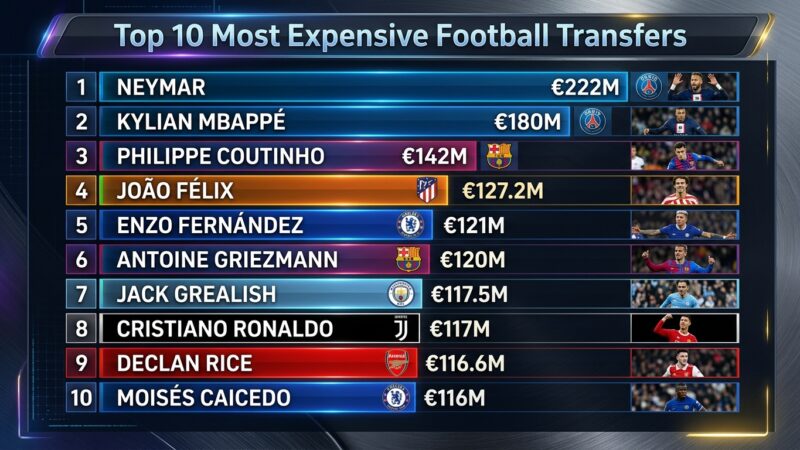
When Paris Saint-Germain handed Barcelona a cheque for €222 million in the summer of 2017 to sign Neymar Jr., the football world stood still. It wasn’t just the sheer size of the fee that shocked fans and pundits alike; it was the mechanism behind it. PSG hadn’t negotiated with Barcelona. They didn’t haggle over the price. They simply activated the Brazilian’s release clause, legally forcing the Spanish giants to let their superstar go.
That single moment changed the transfer market forever. It highlighted the immense power of a few lines of text tucked away inside a player’s employment contract.
Whether you are a die-hard supporter tracking the latest transfer gossip or a casual fan wondering why your club simply can’t refuse a bid for their best player, understanding contract mechanics is essential. In this comprehensive guide, we will break down everything you need to know about release clauses in modern football: how they work, why they exist, the different variations, and the iconic transfers that have defined them.
What Exactly is a Release Clause?
At its core, a release clause is a pre-agreed condition written into a football player’s contract that dictates a specific transfer fee. If a buying club offers this exact amount—and the player wants to make the move—the selling club is legally obligated to accept the bid.
In standard transfers, a buying club submits an offer, and the selling club can negotiate, reject, or accept it at their own discretion. The selling club holds all the cards. They can demand a higher fee, ask for player swaps, or simply declare the player is not for sale at any price.
A release clause completely removes the selling club’s power to negotiate or reject. It sets a definitive price tag. Once that threshold is met, the decision rests entirely in the hands of the player. If the player agrees to personal terms with the buying club, the transfer goes through, regardless of how angry or reluctant the selling club’s management might be.
Buy-out Clauses vs. Release Clauses: The Technical Difference
While fans and media often use the terms interchangeably, there is a distinct legal and financial difference between a “release clause” and a “buy-out clause.”
The Standard Release Clause
Used primarily outside of Spain (such as in the Premier League, Bundesliga, and Serie A), a standard release clause is a contractual agreement between the club and the player. It essentially states, “If Club B offers Club A £50 million, Club A must accept the bid.” The buying club pays the selling club directly.
The Spanish Buy-out Clause (Cláusula de Rescisión)
In Spain, things are much more complex. Due to Spanish labor laws (specifically Royal Decree 1006/1985), every single worker—including professional athletes—has the legal right to terminate their employment contract early by paying compensation to their employer.
Therefore, in La Liga, the player must buy themselves out of their contract. When a transfer happens via a buy-out clause, the buying club deposits the funds into the player’s bank account. The player (usually accompanied by their lawyers and representatives of the buying club) then physically travels to the La Liga headquarters in Madrid to deposit the money and sever their ties with their current club.
Why Do Players and Agents Demand Them?
In the high-stakes world of football agency, leverage is everything. Players and their agents push for release clauses for several strategic reasons:
1. Guaranteeing an Exit Route
For highly touted young talents, joining a “stepping stone” club is a common career move. A player might join a team like Borussia Dortmund, Ajax, or Benfica knowing these clubs excel at developing youth. However, they want to ensure that when a massive club like Real Madrid or Manchester City comes calling, they won’t be priced out of a dream move. A release clause guarantees their exit route.
2. Protecting Against Unreasonable Valuations
Clubs are notorious for slapping massive, unrealistic price tags on their star players to deter buyers. If a player signs a five-year contract without a release clause, they are effectively trapped. If they have a release clause set at £60 million, they know exactly what it takes for another team to sign them, preventing their current club from demanding £100 million.
3. Leverage for Wage Negotiations
Agents often use the threat of a low release clause to secure better wages for their clients. A club might offer a player £100,000 a week with a £50 million release clause. The agent might counter with, “We will agree to a £100 million release clause, but you need to pay my client £150,000 a week.”
Why Do Clubs Agree to Release Clauses?
If release clauses remove a club’s negotiating power, why do they agree to them?
It Is Often a Dealbreaker
In many cases, clubs have no choice. If a top-tier player is negotiating a new contract and demands a release clause, the club must often concede. Refusing could mean the player runs down their contract and leaves for free. Erling Haaland’s move to Borussia Dortmund is a prime example. The Norwegian striker’s camp insisted on a release clause (reportedly around €60 million). Dortmund agreed, knowing it was the only way to secure one of the world’s best young talents, even if it meant losing him below market value a few years later.
Legal Requirements (The Spain Factor)
As mentioned earlier, Spanish clubs do not have a choice. By law, every player must have a buy-out clause. To protect themselves, Spanish giants like Real Madrid and Barcelona have resorted to inserting “anti-Sheikh” clauses.
To prevent another Neymar situation, Barcelona and Real Madrid now regularly insert €1 billion buy-out clauses into the contracts of their young stars, such as Pedri, Gavi, and Vinícius Júnior. This legally fulfills the Spanish labor law requirement but makes it financially impossible for any club—even state-backed ones—to trigger the clause.
The Different Types of Release Clauses
Not all release clauses are as simple as a flat fee. Modern football contracts are incredibly intricate, and release clauses often come with specific conditions attached.
1. Relegation Release Clauses
This is highly common among teams fighting for survival in top-flight leagues. A star player might agree to sign for a mid-table Premier League club, but they will insist on a relegation clause. This clause states that if the club is relegated to the Championship, the player can be bought for a significantly reduced fee. This protects the player from dropping down a division and helps the club offload high wages if their revenue drops.
2. Non-Qualification Clauses (Champions League)
Top players want to play in the UEFA Champions League. If a team fails to qualify for Europe’s elite competition, a specific release clause may become active. This puts immense pressure on the club’s management to build a winning team, as failure on the pitch could result in an automatic exodus of their best talent.
3. Time-Restricted Clauses
Some clauses are only active during a specific window. For example, a clause might state that it can only be triggered between June 1st and July 15th. This ensures that if the player is bought out, the selling club still has plenty of time left in the summer transfer window to find a suitable replacement.
4. Domestic vs. Foreign Club Clauses
Clubs are naturally reluctant to sell their best players to direct domestic rivals. To combat this, a contract might have a tiered release clause. For instance, the clause might be set at £40 million for clubs outside the player’s current league, but £80 million for clubs within the same domestic league.
Famous Transfers Triggered by Release Clauses
To truly understand the impact of release clauses, we have to look at the historical transfers that shocked the footballing landscape.
Neymar Jr. – Barcelona to Paris Saint-Germain (€222m)
The most famous of them all. Barcelona believed the €222 million figure they placed in Neymar’s contract was “unpayable.” They used it as a deterrent. PSG, backed by Qatar Sports Investments, viewed it as an opportunity. When PSG deposited the funds, Barcelona was powerless. This single transfer hyper-inflated the global transfer market, causing player valuations to skyrocket overnight.
Luis Figo – Barcelona to Real Madrid (€62m)
Long before Neymar, there was Luis Figo. In the summer of 2000, Florentino Pérez was running for the presidency of Real Madrid. He promised the fans that if elected, he would sign Barcelona’s captain and best player, Luis Figo. Pérez secretly negotiated with Figo’s agent and, upon winning the presidency, paid the 10,000 million pesetas (roughly €62 million) buy-out clause. It remains one of the most controversial and hostile transfers in football history.
Erling Haaland – Borussia Dortmund to Manchester City (€60m)
Given his incredible goal-scoring record, Erling Haaland’s true market value in 2022 was likely north of €150 million. However, because his agent, the late Mino Raiola, insisted on a relatively low release clause when Haaland joined Dortmund, Manchester City was able to acquire a generational talent for a bargain fee of just €60 million.
Enzo Fernández – Benfica to Chelsea (€121m)
Following a stellar 2022 World Cup, Chelsea desperately wanted the Argentine midfielder. Benfica refused to negotiate, pointing firmly to the €121 million release clause in his contract. After a grueling month of negotiations attempting to lower the price or change the payment structure, Chelsea finally caved on deadline day and agreed to pay the massive clause.
Mario Götze – Borussia Dortmund to Bayern Munich (€37m)
In 2013, on the eve of Borussia Dortmund’s Champions League semi-final against Real Madrid, news broke that Bayern Munich had triggered the €37 million release clause of Dortmund’s golden boy, Mario Götze. It was a devastating psychological blow to Dortmund, demonstrating how rival clubs can use release clauses not just to acquire talent, but to destabilize their closest competitors.
The Financial Mechanics: How Are They Actually Paid?
You might be wondering: does a club literally hand over a briefcase with £50 million? The answer is no, but the reality is equally stressful for club accountants.
In standard transfers, clubs rarely pay the transfer fee in a single lump sum. If Arsenal buys a player from West Ham for £60 million, they typically agree to pay it in installments—perhaps £20 million upfront, and £10 million every year for four years. This helps clubs manage their cash flow and comply with Financial Fair Play (FFP) and Profit and Sustainability Rules (PSR).
Release clauses, however, generally demand the entire fee be paid up front and in full.
This creates a massive cash-flow problem for buying clubs. Finding £100 million in liquid cash to send in a single transaction is difficult, even for the richest organizations in the world.
Because of this, you will often see clubs attempt to negotiate even when a release clause exists. A buying club might say, “We know the release clause is £50 million, and we are willing to pay £55 million, but only if you let us pay it over three years.” If the selling club refuses, the buying club must find a way to finance the upfront payment, often relying on short-term loans from investment banks.
Are Release Clauses Good for Football?
The debate over whether release clauses benefit the sport is highly contentious.
The Pros
- Player Empowerment: They give players more control over their careers, preventing them from being held hostage by clubs making unreasonable demands.
- Market Clarity: They set clear benchmarks. If a player has a £60 million clause, everyone in the market knows exactly what that player is worth in a contractual sense.
- Financial Windfalls for Smaller Clubs: While smaller clubs hate losing their stars, a massive, guaranteed lump-sum payment from a release clause can secure a club’s financial future for a decade if reinvested wisely.
The Cons
- Loss of Club Control: Clubs invest millions in scouting, training, and developing a player, only to have them poached against the club’s will.
- Rich Get Richer: Release clauses disproportionately benefit the wealthiest clubs. Only state-backed or commercially massive clubs have the liquid cash required to trigger massive buyout clauses in a single payment.
- Instability: A club can spend all summer building a tactical system around a star player, only to have their release clause triggered on the final day of the transfer window, leaving them with cash but no time to find a replacement.
The Future of Football Contracts
As football revenue continues to grow, we are seeing a shift in how release clauses are structured. We are moving away from flat fees and toward dynamic clauses.
In the future, we will likely see more performance-based clauses. For example, a clause that starts at £80 million but drops by £10 million for every season the club fails to win a trophy. We are also seeing a rise in “loyalty bonuses” tied to release clauses, where a player waives their right to activate the clause in exchange for a massive financial payout from their current club.
Whatever form they take, release clauses are here to stay. They are the ultimate trump card in the beautiful game’s boardroom battles, capable of tearing up a manager’s tactical blueprint and rewriting a club’s history in the blink of an eye.
Frequently Asked Questions (FAQs)
1. What happens if a club refuses to accept a release clause bid?
Legally, they cannot refuse. If the bid matches the exact contractual amount and the player wishes to leave, the selling club has no legal standing to block the transfer. If they try, the player can take the club to a sports tribunal (like the Court of Arbitration for Sport), which will rule in the player’s favor.
2. Does a player have to leave if their release clause is met?
Absolutely not. A release clause simply gives the buying club the permission to speak to the player. If Club A meets the clause, but the player has no desire to join Club A, the player can simply reject the contract offer and stay where they are.
3. Can a release clause be paid in installments?
Only if the selling club agrees to it. The legal nature of a release clause usually demands a single, upfront payment. If a buying club wants to pay in installments, they are effectively choosing not to activate the clause and are instead opening standard negotiations.
4. Are release clauses mandatory in the English Premier League?
No. Unlike in Spain, release clauses are completely optional in the Premier League, Bundesliga, Serie A, and Ligue 1. They are only included if the player and their representatives successfully negotiate them into the contract.
5. What is the difference between a release clause and a buy-back clause?
A release clause allows any club to buy the player for a set fee. A buy-back clause is a specific agreement between two clubs. For example, if Real Madrid sells a young player to Everton, they might include a buy-back clause stating that Real Madrid (and only Real Madrid) can buy the player back for a specific price in the future.
Conclusion
Release clauses are far more than just arbitrary numbers on a piece of paper; they are the legal mechanisms that dictate the flow of the world’s best footballing talent. From the Spanish labor laws that forced the invention of the buy-out clause to the tactical negotiations of super-agents looking to protect their clients, these clauses represent the complex intersection of sports, law, and high finance.
While they can be a source of anxiety for club executives and fans, they bring an undeniable element of drama to the transfer window. The knowledge that a club’s prized asset could be bought at any moment, regardless of the manager’s wishes, keeps the football world permanently on its toes.
Want to dive deeper into the business of the beautiful game? Check out our other deep dives into football finance, including our guide on [How Financial Fair Play Works] or our breakdown of [The Most Expensive Transfer Flops in History]. Subscribe to our newsletter to never miss a tactical or financial breakdown!

My name is Jeferson, a passionate football enthusiast and the creator of this portal dedicated to fans of the world’s most popular sport. My goal is to provide reliable information, up-to-date news, match analysis, transfer updates, tournament coverage, and everything happening both on and off the pitch.