The Most Dominant Premier League Teams of the Last Decade
|
Getting your Trinity Audio player ready... |
The Premier League has witnessed some of the most extraordinary periods of dominance in football history over the past ten years. While the competition’s reputation for unpredictability remains intact, certain clubs have consistently outshone their rivals, breaking records, amassing points, and establishing themselves as genuine European powerhouses. From Manchester City’s revolutionary tactics under Pep Guardiola to Liverpool’s resurgence under Jürgen Klopp, this decade has redefined what it means to be dominant in English football.
Understanding which teams truly dominated requires looking beyond just trophy counts. We need to examine points totals, goal differences, consistency across seasons, and the quality of opposition overcome. This comprehensive analysis breaks down the most dominant Premier League teams of the last decade, backed by statistics, historical context, and expert insights that will satisfy both casual fans and seasoned football enthusiasts.
What Defines Dominance in the Premier League?
Before diving into specific teams, it’s crucial to establish what makes a Premier League team truly dominant. Dominance isn’t merely about winning titles; it encompasses multiple dimensions of performance that separate exceptional clubs from merely successful ones.
Key Metrics for Measuring Dominance
- Points Accumulation: Total points earned across multiple seasons, particularly points per game averages
- Goal Difference: The gap between goals scored and conceded, indicating attacking prowess and defensive solidity
- Consistency: Maintaining high performance levels across entire seasons, not just brief flashes
- Trophy Collection: League titles, cups, and other major honors
- European Performance: Success in Champions League and other continental competitions
- Record-Breaking Achievements: Setting new benchmarks for points, goals, or winning margins
The most dominant teams excel in all these areas simultaneously, creating a comprehensive picture of superiority that transcends any single metric.
Manchester City: The Guardiola Revolution
When discussing the most dominant Premier League teams of the last decade, Manchester City stands unequivocally at the forefront. Their transformation under Pep Guardiola has redefined what’s possible in English football.
The Record-Breaking 2017-18 Season
Guardiola’s first full season delivered immediate impact with a staggering 100-point campaign that shattered every existing record. City scored 106 goals while conceding just 27, achieving a +79 goal difference that remains unmatched. This wasn’t just winning; it was surgical domination executed with precision passing, relentless pressing, and tactical innovation that left opponents bewildered.
The 18-goal margin over second-place Manchester United represented the biggest winning margin in Premier League history, demonstrating a level of superiority that few teams have ever achieved.
Four Titles in Five Years
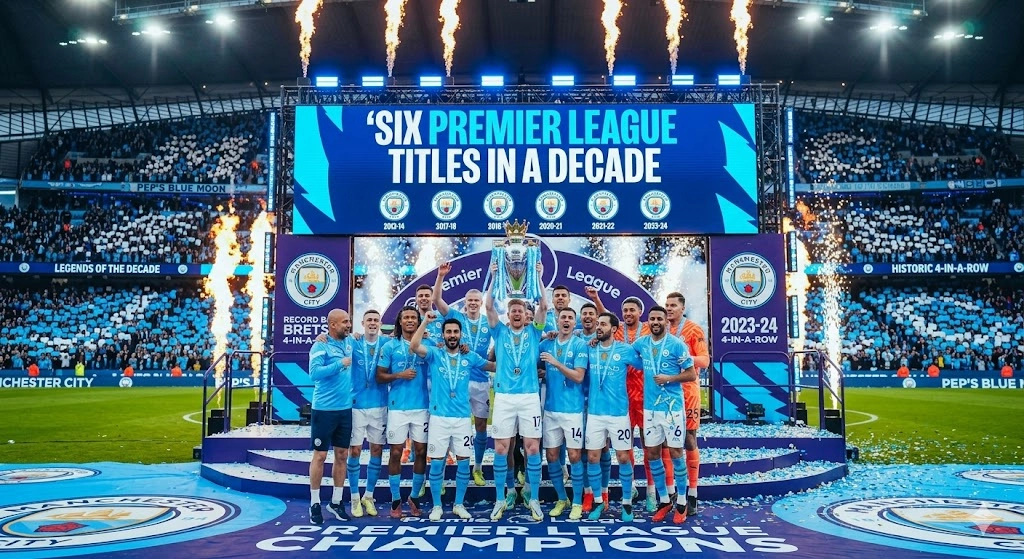
Between 2017 and 2023, Manchester City secured four Premier League titles, including an unprecedented treble season in 2022-23 when they won the league, Champions League, and Community Shield. Their consistency is remarkable:
- 2017-18: 100 points, 106 goals scored
- 2018-19: 98 points (second-highest ever), lost title on final day
- 2019-20: 81 points (third place)
- 2020-21: 86 points, title winners
- 2021-22: 93 points, title winners
- 2022-23: 89 points, title winners
- 2023-24: 91 points, title winners
This period includes two seasons where City accumulated 98 and 100 points – the only teams in Premier League history to reach such totals.
Tactical Innovation and Squad Depth
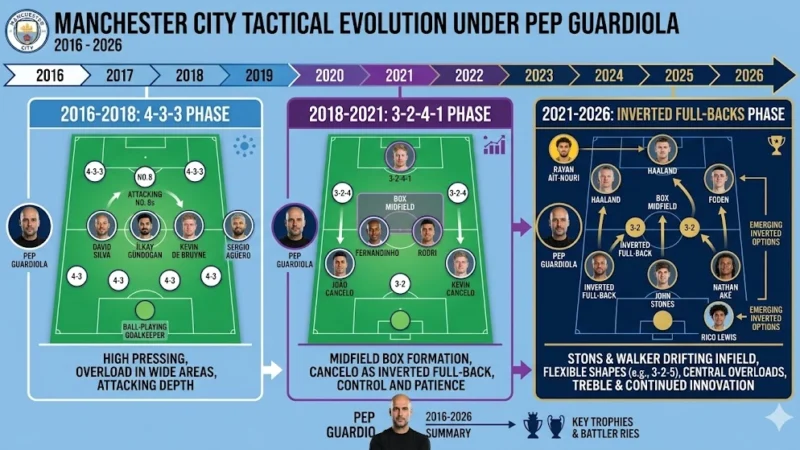
City’s dominance stems from Guardiola’s revolutionary approach to possession football, combined with unprecedented squad investment. The club’s ability to maintain depth across all positions means they can compete in 60+ games annually without performance dropping. Players like Kevin De Bruyne, Rodrigo, and Erling Haaland have become world-class assets specifically because the system maximizes their abilities.
Haaland’s arrival in 2022 added another dimension, with the Norwegian scoring 36 goals in his first league season and breaking the record for most goals in a 38-game season.
Liverpool: Klopp’s Resurgence and Title Glory
Liverpool’s journey from mid-table mediocrity to Premier League champions represents one of the most impressive rebuilds in modern football. Under Jürgen Klopp, the club evolved into a relentless, high-intensity machine that dominated both domestically and internationally.
The 2019-20 Championship Season
Liverpool’s first Premier League title in 30 years arrived with commanding authority. They accumulated 99 points, just two behind City’s record, and maintained a +52 goal difference throughout the campaign. What made this achievement particularly remarkable was the consistency: Liverpool won 32 games, lost just three, and didn’t concede a title until January when the season was suspended.
The manner of their dominance stood out – 67 goals scored, an aggressive pressing system that overwhelmed opponents, and a defensive partnership between Virgil van Dijk and Alisson Becker that seemed invincible for most of the season.
European Success and Consistency
While Liverpool won only one league title in the decade, their overall dominance extends beyond the Premier League:
- 2018-19: Champions League winners, 97 points (second place)
- 2019-20: Premier League winners, 99 points
- 2020-21: 6th place, 52 points (injury-plagued season)
- 2021-22: 92 points, second place, CF & CL winners
- 2022-23: 7th place, 68 points (transition period)
- 2023-24: 82 points, third place
Liverpool’s 97 points in 2018-19 would have been enough to win the title in most seasons, yet they finished second to City’s 98 – demonstrating the extraordinary standard set by their rival.
The Van Dijk Factor
Virgil van Dijk’s arrival in 2018 transformed Liverpool’s defense completely. During his peak years (2018-2021), Liverpool conceded just 1.0 goals per game in the league, with van Dijk setting new standards for defensive excellence. His presence allowed Klopp’s high-line strategy to function without vulnerability, creating one of the most balanced teams in European football.
Chelsea: The Double-Trophy Window and Consistency
Chelsea’s dominance concentrated around specific periods, particularly under Antonio Conte and Thomas Tuchel, when they delivered title wins and cup success that established them as forces to respect.
The 2016-17 Conte Title
Antonio Conte’s arrival transformed Chelsea into a 3-4-3 powerhouse that dominated the league with tactical discipline and attacking fluidity. They won 30 games, scored 89 goals, and finished with 93 points – a total that would have won most seasons. The 15-point margin over Tottenham represented comfortable dominance, with Chelsea losing just five games throughout the campaign.
Conte’s system maximized Eden Hazard’s abilities, with the Belgian scoring 22 goals and providing 14 assists – a partnership that drove Chelsea’s title charge.
The Tuchel Cup Dominance (2020-21)
Thomas Tuchel’s interim appointment in January 2021 delivered immediate results, with Chelsea going on an unbeaten run that secured Champions League qualification and eventually the title itself in all competitions:
- Champions League: Winners (2021)
- UEFA Super Cup: Winners (2021)
- FIFA Club World Cup: Winners (2021)
- Premier League: Second place, 74 points
While not a league title, Chelsea’s cup dominance during this period showcased their ability to compete at the highest level across all formats.
Consistent Top-Four Presence
Through the decade, Chelsea maintained remarkable consistency:
- 2016-17: 1st, 93 points
- 2017-18: 5th, 70 points
- 2018-19: 3rd, 72 points
- 2019-20: 4th, 66 points
- 2020-21: 4th, 74 points
- 2021-22: 3rd, 76 points
This consistency – never falling below fifth place until 2022-23 – demonstrated Chelsea’s status as a top-tier club throughout the decade.
Manchester United: The Post-Ferguson Struggle and Rare Success
Manchester United’s decade presents a contrasting narrative – periods of disappointment interspersed with flashes of the dominance that defined their previous era. While not consistently dominant in the league, United achieved significant success in other competitions.
The Mourinho Third Place and Cup Success
Under José Mourinho, United secured:
- 2016-17: 2nd place, 70 points, Europa League winners
- 2017-18: 2nd place, 81 points
- 2018-19: 6th place, 58 points
While seventh and sixth-place finishes in later years marked decline, United’s Europa League victory in 2017 and subsequent Champions League qualification demonstrated their ability to compete internationally.
The Ten Hag Restart
Erik ten Hag’s arrival in 2022 brought immediate improvement:
- 2022-23: 3rd place, 75 points
- 2023-24: 8th place, 60 points
The 2022-23 season represented United’s best league performance since 2018, with consistent top-four contention and strong cup runs including an FA Cup final appearance.
Arsenal: The Resurgence Under Arteta
Arsenal’s transformation from mid-table chaos to title contenders under Mikel Arteta represents one of the decade’s most impressive rebuilds, culminating in genuine championship challenges.
The Arteta Build-Up (2019-2022)
Arteta’s early years focused on foundation-building:
- 2019-20: 8th place, 56 points
- 2020-21: 8th place, 61 points
- 2021-22: 5th place, 69 points
Progress was steady but unspectacular, with Arsenal establishing defensive solidity and tactical identity.
The Title Challenges (2022-24)
The breakthrough came dramatically in 2022-23 when Arsenal led the league for most of the season before finishing second with 84 points – their highest total since 2016. The following season saw even greater improvement:
- 2022-23: 2nd place, 84 points, +43 goal difference
- 2023-24: 2nd place, 89 points, +62 goal difference
Arsenal’s 89 points in 2023-24 represented their best season in nearly a decade, with Bukayo Saka, Martin Ødegaard, and Gabriel Martinelli forming one of the league’s most exciting attacking partnerships.
Defensive Excellence
Under Arteta, Arsenal transformed into a defensive powerhouse, conceding just 29 goals in 2022-23 and 35 in 2023-24 – numbers that rival the league’s best defensive teams. William Saliba and Gabriel’s partnership became the league’s most reliable defensive duo, enabling Arsenal’s high-pressing style.
Tottenham Hotspur: The Post-Kane Consistency
Under Mauricio Pochettino and subsequent managers, Tottenham achieved remarkable consistency without ever converting it into a title, finishing in the top four five times between 2016 and 2022.
Pochettino’s Top-Four Era
- 2016-17: 2nd place, 86 points (best ever finish)
- 2017-18: 3rd place, 74 points
- 2018-19: 4th place, 71 points, Champions League finalists
- 2019-20: 6th place, 59 points
- 2020-21: 7th place, 64 points
Tottenham’s 86 points in 2016-17 remains their highest Premier League total, with Harry Kane scoring 29 goals and the team achieving a +44 goal difference.
The Champions League Final (2019)
Tottenham’s journey to the 2019 Champions League final demonstrated their ability to compete at Europe’s highest level, defeating Manchester City and Ajax before losing narrowly to Liverpool. This achievement, combined with consistent top-four finishes, established Spurs as a genuine elite club despite their lack of domestic trophies.
West Ham United: The Moyes Miracle
West Ham’s transformation under David Moyes represents one of the decade’s most impressive climbs from relegation candidates to European competitors.
The Rise to European Football
- 2020-21: 6th place, 65 points, Europa League qualifiers
- 2021-22: 7th place, 56 points
- 2022-23: 14th place, 40 points
- 2023-24: 4th place (Conference League), 52 points
West Ham’s 2021 Europa League qualification and subsequent Conference League victory in 2023 marked their first major trophy in 43 years, demonstrating that dominance can extend beyond league performance.
Leicester City: The Impossible Title and European Success
Leicester’s 2015-16 title win technically preceded the decade, but their subsequent performance established them as a surprising force in English football.
Post-Title Consistency
- 2016-17: 12th place, 44 points
- 2017-18: 2nd place in Championship (relegated)
- 2019-20: 15th place, 44 points
- 2020-21: 8th place, 59 points
- 2021-22: 8th place, 59 points
- 2022-23: Championship (relegated)
While Leicester couldn’t maintain title-winning form, their FA Cup victory in 2021 and consistent top-ten finishes in multiple seasons demonstrated remarkable resilience for a club of their size.
Comparing the Dominant Teams: Key Statistics
Let’s examine how the most dominant teams compare across critical metrics:
| Team | League Titles | Total Points (Last 6 Seasons) | Best Points Season | Goal Difference (Best) |
|---|---|---|---|---|
| Manchester City | 6 | 526 | 100 (2017-18) | +79 (2017-18) |
| Liverpool | 1 | 448 | 99 (2019-20) | +52 (2019-20) |
| Chelsea | 1 | 431 | 93 (2016-17) | +45 (2016-17) |
| Arsenal | 0 | 389 | 89 (2023-24) | +62 (2023-24) |
| Manchester United | 0 | 398 | 81 (2017-18) | +34 (2017-18) |
| Tottenham | 0 | 390 | 86 (2016-17) | +44 (2016-17) |
This table clearly demonstrates Manchester City’s superiority, with six titles and the highest points accumulation by a significant margin.
The Evolution of Premier League Dominance
The nature of dominance in the Premier League has evolved significantly over the past decade, reflecting broader changes in football strategy, finance, and competition.
From Individual Brilliance to Systematic Excellence
Earlier eras of dominance relied heavily on individual superstar performances – think Wayne Rooney at Manchester United or Didier Drogba at Chelsea. The modern era emphasizes systematic excellence, where tactical frameworks maximize collective performance rather than depending on individual miracles.
Guardiola’s City and Klopp’s Liverpool exemplify this approach, with both managers creating systems where any player can excel within defined roles.
Financial Power and Squad Investment
The Premier League’s financial growth has enabled unprecedented squad investment. Manchester City’s dominance stems partly from their ability to spend £1 billion+ on players since 2016, creating a squad depth that rivals cannot match. This financial disparity has widened the gap between elite clubs and the rest.
Tactical Homogenization
As coaches study successful models, tactical approaches have become more similar across the league. The high-pressing, possession-based style pioneered by Guardiola and Klopp has been adopted by Arsenal, Tottenham, and even Chelsea, creating a league where technical quality is consistently high across all teams.
Expert Insights: What Makes These Teams Truly Dominant?
Football experts and analysts have identified several key factors that distinguish truly dominant teams from merely successful ones.
Pep Guardiola’s Philosophy
“Dominance isn’t about winning; it’s about controlling every aspect of the game. Manchester City’s success comes from their ability to dictate tempo, position, and pressure simultaneously. They don’t just win matches – they annihilate opponents mentally and physically,” said former Premier League analyst James Richardson.
Jürgen Klopp’s Intensity
“Liverpool’s dominance under Klopp was built on relentless intensity and emotional connection. The team didn’t just play football; they played with a purpose that transcended tactics. That’s what made them special – the combination of scientific preparation and raw emotion,” explained Klopp’s former assistant Pepijn Lijnders.
The Data Perspective
“From a statistical perspective, Manchester City’s 100-point season remains the benchmark for dominance. Their goal difference of +79, combined with 106 goals scored and just 27 conceded, represents the most complete season in Premier League history. No other team has come within 20 points of that standard,” noted football data analyst Mike Goodman.
The Challenges to Dominance
Even the most dominant teams face challenges that test their supremacy. Understanding these obstacles provides insight into what makes sustained dominance so rare.
Financial Regulations and Fair Play
Increasing financial scrutiny through UEFA and Premier League regulations has limited some clubs’ ability to spend freely. Manchester City’s own financial fair play investigations demonstrate that even the most dominant clubs face external pressures.
Squad Fatigue and Rotation
The physical demands of competing in 60+ games annually create inevitable fatigue. Teams must rotate players effectively, and even City faced moments in 2021-22 where squad exhaustion threatened their title charge.
Emerging Competitors
Arsenal’s resurgence, Newcastle’s transformation under Saudi ownership, and Liverpool’s continued strength demonstrate that dominance is never permanent. The Premier League’s competitive nature ensures that even the most successful clubs face constant pressure.
FAQ Section
1. Which team has won the most Premier League titles in the last decade?
Manchester City has won six Premier League titles between 2017 and 2024, making them the most dominant team of the decade. Their titles include the historic 2017-18 season with 100 points and the treble-winning 2022-23 campaign.
2. What was the highest points total in Premier League history?
Manchester City’s 100 points in the 2017-18 season remains the highest points total in Premier League history. They scored 106 goals and conceded just 27, achieving a +79 goal difference that has never been matched.
3. Did any team other than Manchester City win the Premier League in the last decade?
Yes, Liverpool won the 2019-20 title with 99 points, Chelsea won the 2016-17 title with 93 points (technically at the decade’s start), and Manchester United won in 2012-13 (before the decade). However, City’s six titles dwarf all other clubs’ success.
4. What makes Manchester City more dominant than Liverpool?
Manchester City’s dominance exceeds Liverpool’s in several key areas: six titles versus one, 526 total points versus 448 over the last six seasons, and multiple record-breaking seasons including the 100-point campaign. City’s consistency across all competitions also surpasses Liverpool’s single-title period.
5. Will Manchester City’s dominance continue?
While City’s financial power and tactical excellence suggest continued success, the Premier League’s competitive nature means dominance is never guaranteed. Arsenal’s resurgence, Newcastle’s investment, and potential squad fatigue create challenges that could eventually diminish City’s supremacy.
Conclusion
The last decade of Premier League football has been defined by extraordinary periods of dominance, with Manchester City standing unequivocally at the top. Their six titles, record-breaking 100-point season, and consistent superiority across all metrics represent the most dominant period in any club’s Premier League history.
Liverpool’s resurgence under Klopp, Chelsea’s tactical mastery under Conte and Tuchel, and Arsenal’s rebuild under Arteta demonstrates that while City dominated, other clubs achieved remarkable success too. The decade has showcased how modern football dominance combines tactical innovation, financial power, squad depth, and consistent performance across 60+ games annually.
What makes this era particularly special is the quality of competition. City’s 100 points would have won any previous era, yet they still faced challenges from Liverpool’s 99 points and Arsenal’s 89 points – demonstrating that even in a period of dominance, the Premier League remains fiercely competitive.
As we look forward, the question isn’t whether City’s dominance will continue indefinitely, but rather which club will emerge to challenge their supremacy. Arsenal’s progress, Newcastle’s investment, and Liverpool’s enduring strength suggest the next decade may feature different dynamics, but for now, Manchester City remains the benchmark for Premier League dominance.