Rising Young Stars Who Could Dominate Football in the Next Decade
|
Getting your Trinity Audio player ready... |
Football moves fast. One moment you are watching Lionel Messi and Cristiano Ronaldo trade Ballon d’Ors, and the next, a 16-year-old is shattering international records on the biggest stages in the world. As the old guard slowly transitions into retirement, a new, incredibly polished generation of talent is stepping into the spotlight.
But potential is a tricky thing. For every Kylian Mbappé who fulfills his early promise, there are countless others who fade under the immense pressure of top-flight football. So, how do we separate the fleeting hype from genuine, generation-defining talent?
When identifying the rising young stars who could dominate football in the next decade, we aren’t just looking for flashy stepovers or viral highlight reels. We are looking for elite decision-making, physical resilience, tactical intelligence, and a seemingly unbreakable mentality.
In this comprehensive guide, we will dive deep into the profiles of the world’s most exciting footballing prodigies. Whether you are a seasoned scout, a casual fan, or a passionate Football Manager player, these are the names you need to know for the next ten years of the beautiful game.
The Evolution of the “Wonderkid”
Before we jump into the names, it is vital to understand how youth development has fundamentally shifted in modern football.
Twenty years ago, a “wonderkid” was often a raw, unpolished gem. A player like Wayne Rooney burst onto the scene relying heavily on natural instinct, street-football aggression, and raw physical power. Today, academies operate like highly specialized science laboratories.
Top clubs like Barcelona (La Masia), Paris Saint-Germain, and Palmeiras utilize advanced data analytics, biomechanics, and personalized psychological coaching from the moment a player turns 10. By the time these modern prodigies make their senior debuts at 16 or 17, they possess the tactical understanding of a 28-year-old veteran.
This hyper-professional environment means that the rising young stars who could dominate football in the next decade are entering the men’s game more prepared than any generation before them.
The Attackers: Redefining the Final Third
Goalscorers and wide playmakers will always capture the imagination of the fans. The next decade will be defined by attackers who are not just goalscorers, but elite creators as well.
Lamine Yamal (Barcelona & Spain)
It is impossible to discuss the future of football without starting with Lamine Yamal. Bursting onto the scene for Barcelona at just 15 years old, Yamal has rewritten what we thought was possible for a teenager in elite football.
His performances during UEFA Euro 2024, where he led Spain to glory and scored a mesmerizing goal against France, cemented his status not just as a prospect, but as a current world-class winger.
Key Attributes:
- Elite Decision-Making: Unlike most young wingers who put their heads down and run, Yamal always scans the pitch. He knows when to shoot, when to pass, and when to recycle possession.
- Lethal 1v1 Ability: His low center of gravity and unpredictable feints make him a nightmare for full-backs.
- Vision: He frequently drops deep to dictate play, displaying passing metrics usually reserved for central midfielders.
Endrick (Real Madrid & Brazil)
If Yamal represents elegance, Endrick represents pure, unadulterated explosive power. Discovered by Palmeiras and quickly snapped up by Real Madrid, the Brazilian forward is a terrifying prospect for defenders.
Comparisons to Brazilian legends like Romário and Ronaldo Nazário are not made lightly, but Endrick’s thunderous left foot and incredible core strength make the comparisons justified. His goal for Brazil at Wembley Stadium against England proved he thrives on the biggest stages.
Key Attributes:
- Explosive Acceleration: Endrick can burst past a defender in the blink of an eye.
- Ball Striking: He generates unnatural power with minimal backlift, making his shots incredibly difficult for goalkeepers to read.
- Physical Dominance: Despite his relatively short stature, his lower body strength allows him to hold off towering center-backs.
Estêvão Willian (Chelsea & Brazil)
Nicknamed “Messinho” during his youth days, Estêvão is another product of the incredible Palmeiras academy. Having secured a massive transfer to Chelsea, the Brazilian winger is tipped to take the Premier League by storm.
While Endrick is a physical powerhouse, Estêvão is a traditional Brazilian trickster blended with modern European efficiency. He hugs the touchline, isolates his defender, and creates chaos in the penalty area.
Key Attributes:
- Close Control: The ball appears glued to his feet, even at top speed.
- Incisive Passing: He possesses a wonderful ability to slip through-balls behind low-block defenses.
- Set-Piece Threat: Already a specialist from dead-ball situations.
The Midfield Maestros: Dictating the Tempo
Matches are won and lost in the center of the pitch. The modern midfielder must be press-resistant, physically dominant, and capable of breaking lines with a single pass.
Kobbie Mainoo (Manchester United & England)
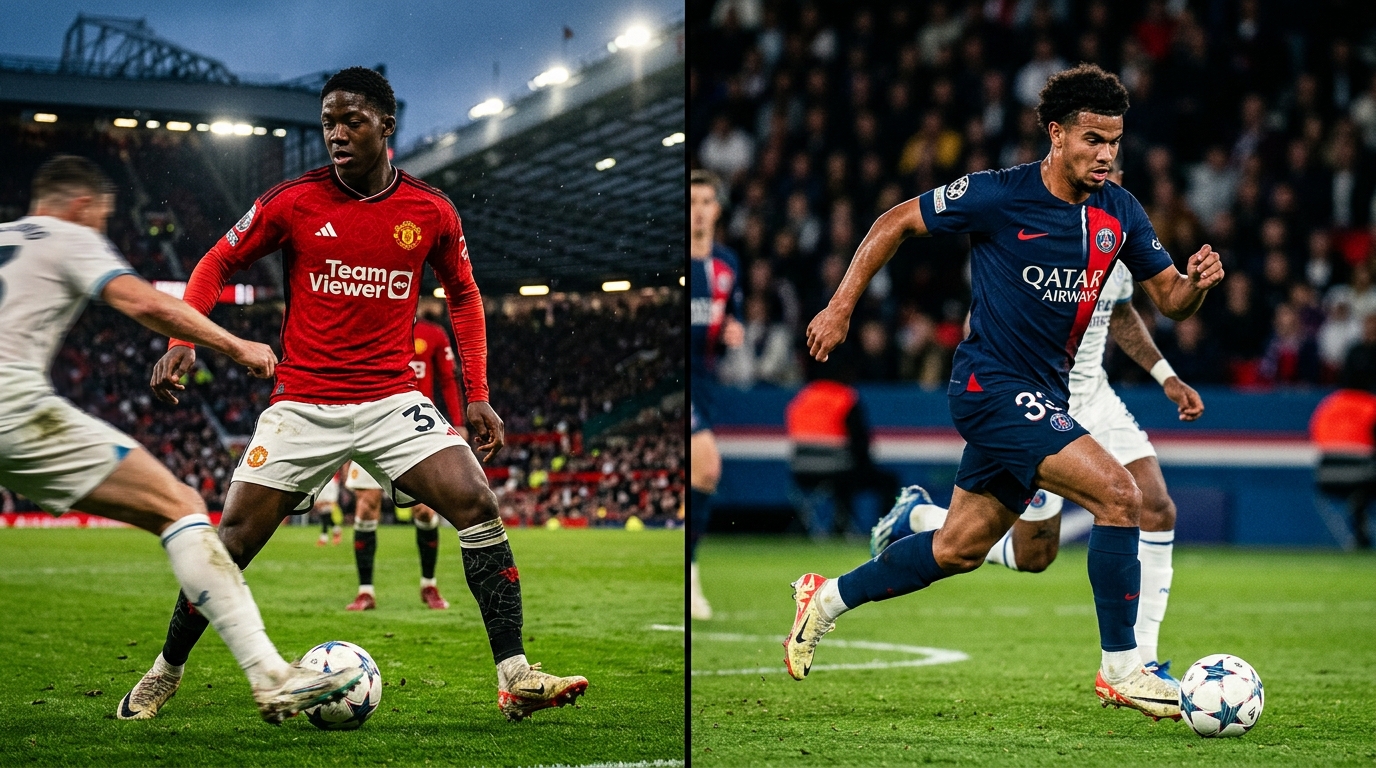
In a turbulent period for Manchester United, Kobbie Mainoo emerged as a beacon of pure class. He doesn’t play like a typical English midfielder; he plays with the rhythmic, slow-heartbeat style of a Spanish or Italian maestro.
His stunning goal in the FA Cup Final against Manchester City showcased his technical ability, but it is his off-the-ball intelligence that truly sets him apart.
Key Attributes:
- Press Resistance: Mainoo possesses an elite ability to receive the ball on the half-turn while under immense pressure.
- Composure: He never looks rushed, dictating the tempo of the game entirely on his own terms.
- Defensive Positioning: He consistently intercepts passes by reading the game two steps ahead of the opposition.
Warren Zaïre-Emery (Paris Saint-Germain & France)
To become a regular starter in PSG’s star-studded midfield at the age of 17 requires a generational talent. Warren Zaïre-Emery is exactly that.
Under Luis Enrique, the Frenchman has developed into a complete box-to-box midfielder. He combines the physical engine of N’Golo Kanté with the progressive carrying ability of Jude Bellingham.
Key Attributes:
- Ball Carrying: Zaïre-Emery is devastating in transition, driving through the center of the pitch to turn defense into attack.
- Physicality: He regularly out-muscles fully grown, veteran midfielders.
- Versatility: He can operate as a single pivot, a box-to-box number eight, or even an inverted right-back if required.
Arda Güler (Real Madrid & Turkey)
Affectionately dubbed the “Turkish Messi,” Arda Güler’s move to Real Madrid was hampered by early injuries, but his talent is undeniable. He is a throwback to the classic number 10, updated with the pressing metrics required in the modern game.
Güler’s ability to unlock defenses with disguised passes and incredible long-range shooting makes him one of the most aesthetically pleasing players to watch in world football.
Key Attributes:
- Elite Vision: He sees passing angles that most players don’t even know exist.
- Deadly Left Foot: Whether from free-kicks or open play, his left foot is a lethal weapon.
- Tight-Space Dribbling: He excels at navigating out of congested areas in the final third.
The Defensive Rocks: Building from the Back
The role of the center-back has evolved drastically. Today, defenders are judged almost as much on their passing ability as their tackling.
Pau Cubarsí (Barcelona & Spain)
If you want to know what the future of defending looks like, watch Pau Cubarsí. Thrown into the deep end of the Champions League knockout stages against Napoli as a 17-year-old, he casually pocketed one of the best strikers in the world, Victor Osimhen.
Cubarsí defends with his brain rather than brawn. More impressively, his passing range is so elite that he effectively acts as Barcelona’s deep-lying playmaker.
Key Attributes:
- Line-Breaking Passes: He regularly bypasses the opposition’s midfield press with laser-guided passes into the attackers.
- Anticipation: He rarely has to make a sliding tackle because his positioning is always flawless.
- Aerial Timing: Despite not being the tallest, his leap and timing allow him to win crucial aerial duels.
Leny Yoro (Manchester United & France)
Standing at 6-foot-3, Leny Yoro represents the ultimate physical archetype for a modern center-back. Making his name at Lille before a massive move to the Premier League, Yoro draws heavy comparisons to a young Raphaël Varane.
He combines frightening recovery pace with a calm demeanor on the ball, making him the perfect defender for teams that want to play a high defensive line.
Key Attributes:
- Recovery Pace: Even if an attacker gets behind the line, Yoro has the speed to catch them.
- 1v1 Defending: He is incredibly difficult to dribble past due to his long stride and patient tackling.
- Aerial Dominance: A massive threat from attacking corners and a brick wall when defending crosses.
What Separates the Good from the Great?
Why do some wonderkids go on to win the Ballon d’Or, while others end up bouncing around lower leagues by the time they are 24? The difference between a “prospect” and a “legend” usually comes down to three key factors.
1. Elite Mentality
The pressure of modern football is suffocating. Social media scrutiny, relentless media cycles, and demanding fanbases can crush a young player’s confidence. The rising young stars who could dominate football in the next decade all share an almost robotic ability to ignore outside noise. They treat a Champions League final with the same emotional baseline as a training session.
2. Tactical Adaptability
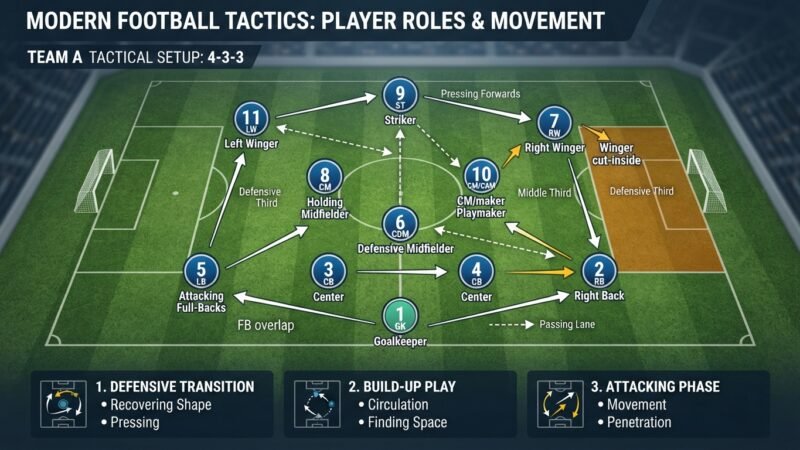
Managers change, systems evolve, and football trends shift. A player who can only perform in one highly specific system will eventually get left behind. Players like Mainoo and Zaïre-Emery are valuable because they can seamlessly transition from a possession-based 4-3-3 to a counter-attacking 4-2-3-1 without skipping a beat.
3. Injury Prevention and Load Management
This is arguably the most critical factor. We have seen brilliant young players like Pedri suffer from severe muscle injuries due to playing 70+ games a year as a teenager. The young stars who dominate the 2030s will be those who—alongside their club’s medical staff—master their physical load, prioritize recovery, and avoid chronic injuries during their crucial developmental years.
Frequently Asked Questions (FAQ)
1. Who is the best young football player right now? While opinions vary, Lamine Yamal is widely considered the best teenager in world football right now. His performances for Barcelona and the Spanish National Team, culminating in a European Championship victory, put him in a tier of his own regarding current, proven impact.
2. At what age does a football player usually peak? Historically, football players peak between the ages of 26 and 29. During this window, players perfectly combine their physical prime with years of accumulated tactical experience. However, with modern sports science, players are reaching elite levels earlier (18-20) and sustaining their prime well into their mid-30s.
3. How do clubs scout these rising young stars? Modern scouting is a blend of data analytics and traditional “eye-test” scouting. Clubs use advanced software to track metrics like “expected assists,” “progressive passes,” and “press resistance” in youth leagues globally. Once a player flags well on the data, senior scouts are sent to evaluate their mentality, body language, and off-the-ball work rate in person.
4. Will we ever see another Messi-Ronaldo rivalry? It is highly unlikely we will see two players score 50+ goals a season for 15 years straight while playing for rival clubs in the same league. However, rivalries like Mbappé vs. Haaland, or potentially Yamal vs. Endrick, will provide the narrative drama that football fans crave for the next decade.
5. Why are so many young players coming from Brazil and Spain? Spain and Brazil have deeply ingrained footballing cultures backed by world-class youth academies. In Spain, academies focus heavily on technical perfection, spatial awareness, and passing (the “Rondo” culture). In Brazil, the mixture of futsal, street football, and highly competitive youth club leagues naturally breeds players with elite 1v1 dribbling skills and attacking flair.
Conclusion
The future of the beautiful game is in incredibly safe hands. The rising young stars who could dominate football in the next decade are not just physically gifted; they are tactical savants, mentally resilient, and ready to take on the world.
From the dazzling wing play of Lamine Yamal and Estêvão Willian to the midfield mastery of Kobbie Mainoo and the defensive brilliance of Pau Cubarsí, the next ten years promise to deliver a breathtaking evolution of football. As fans, all we can do is sit back and enjoy the show as these wonderkids transform into the legends of tomorrow.
What do you think? Did we miss your favorite rising star? Are there any hidden gems in your club’s academy that the world needs to know about? Drop a comment below, share this article with your fellow football fans, and be sure to explore our website for more deep-dive tactical analysis and transfer news!

My name is Jeferson, a passionate football enthusiast and the creator of this portal dedicated to fans of the world’s most popular sport. My goal is to provide reliable information, up-to-date news, match analysis, transfer updates, tournament coverage, and everything happening both on and off the pitch.