The Biggest Football Stories Shaping the Sport This Year
|
Getting your Trinity Audio player ready... |
Football has always been a sport defined by eras, but few years have felt quite as transformative as 2026. If you are a football fan—whether you watch purely for the love of the beautiful game or you obsess over the intricate tactical details—this year has delivered storylines that will be talked about for decades. We are currently witnessing a seismic shift in how the sport is played, officiated, and celebrated on the global stage.
From the unprecedented scale of the ongoing 2026 FIFA World Cup in North America to Paris Saint-Germain’s monumental back-to-back Champions League triumph, the narrative of modern football is being rewritten. Add to that a suite of revolutionary rule changes that are forcing managers to rethink their entire playbooks, and it becomes clear that 2026 is a watershed moment.
In this comprehensive guide, we will dive deep into the biggest football stories shaping the sport this year, analyzing what they mean for players, coaches, and fans alike. Grab your favorite club’s shirt, settle in, and let’s explore the narratives defining the beautiful game in 2026.
The Historic 2026 FIFA World Cup: A New Era of Global Football
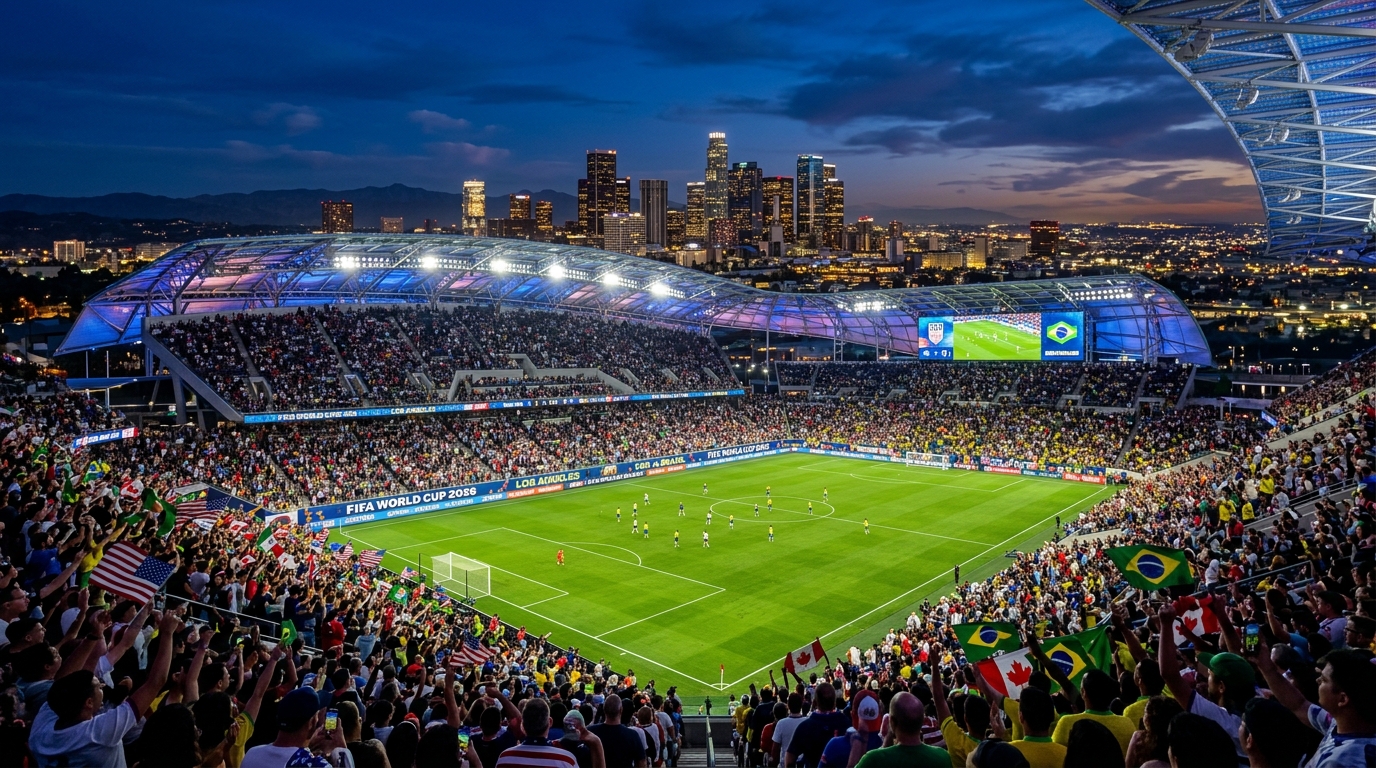
The FIFA World Cup is the pinnacle of international football, but the 2026 edition has taken the spectacle to an entirely new stratosphere. Hosted jointly by the United States, Canada, and Mexico, this tournament represents a massive leap forward in both scale and ambition.
A 48-Team Extravaganza
For the first time in history, the World Cup features 48 teams, a significant expansion from the 32-team format that fans have grown accustomed to since the 1998 tournament in France. This expansion has completely altered the qualification pathways, opening the door for nations that have historically struggled to reach the grandest stage.
The inclusion of 16 additional teams means we are seeing 104 matches played across the tournament. For football purists, the fear was that an expanded tournament might dilute the quality of the competition. However, the reality on the ground has been quite the opposite. The expanded format has injected a thrilling unpredictability into the group stages. Every match matters, and the tactical dynamics have shifted. Smaller nations are no longer just making up the numbers; they are bringing distinct tactical setups, often relying on deep defensive blocks and lightning-fast transitions, which is forcing traditional powerhouses to adapt.
Early Thrills and Spills
As the tournament unfolds in June 2026, we are already seeing the impact of this new format. The group stages have delivered immediate drama. For instance, in Group A, Mexico thrilled their home fans at the Estadio Azteca with a commanding 2-0 victory over South Africa, overcoming an incredibly tense match that saw multiple red cards. Meanwhile, South Korea edged out the Czech Republic in a tight 2-1 contest in Guadalajara.
In Group B, the tournament has already served up upsets, such as Bosnia and Herzegovina’s gritty 1-0 victory over co-hosts Canada in Toronto, proving that European tactical discipline can frustrate home advantage. These early storylines underscore the sheer unpredictability of a 48-team tournament, where the margin for error is slimmer, and the diversity of playing styles is broader than ever before.
North America Takes Center Stage
The logistical triumph of hosting a tournament across three massive nations cannot be understated. From the historic heights of Mexico City to the modern sporting palaces of Los Angeles, Dallas, and Toronto, the venues are as much a part of the story as the players. The cultural crossover, the merging of fanbases, and the sheer commercial magnitude of this World Cup are setting new benchmarks for international sporting events.
Paris Saint-Germain’s Historic Champions League Defence
While the international stage is dominated by the World Cup, the pinnacle of club football delivered a story for the ages just weeks prior. On May 30, 2026, at the Puskás Aréna in Budapest, Paris Saint-Germain cemented their legacy as one of the greatest club sides of the modern era by retaining the UEFA Champions League title.
The Real Madrid Benchmark Reached
Winning the Champions League is a monumental achievement; defending it is near-impossible. Before 2026, only Real Madrid had managed to win back-to-back titles in the modern Champions League era (achieving an incredible three-peat between 2016 and 2018). Under the masterful tactical guidance of Luis Enrique, PSG matched that feat, overcoming Arsenal in a tense, nerve-wracking final that went all the way to penalties.
The narrative arc of PSG over the last decade has been one of immense spending, domestic dominance, and recurring European heartbreak. To see them not only conquer Europe in 2025 but return in 2026 and defend their crown signals a maturity and psychological resilience that the Parisian club previously lacked.
Heartbreak for Arsenal
The final itself was a masterclass in tension. Arsenal, returning to the Champions League final for the first time in 20 years, started brightly. Kai Havertz—a man who knows exactly how to score in a European final, having done so for Chelsea in 2021—opened the scoring just six minutes in. A deflected clearance fell to the German forward, who beat PSG goalkeeper Matvey Safonov from a tight angle.
Arsenal, boasting one of the most formidable defenses in Europe, retreated into a structured low block. Mikel Arteta’s men frustrated PSG for an hour, limiting the French champions’ attacking fluidity. However, the relentless pressure eventually told. Khvicha Kvaratskhelia, PSG’s dynamic attacking force, won a crucial penalty in the 65th minute after being brought down by Christian Mosquera. Up stepped Ballon d’Or winner Ousmane Dembélé, who calmly dispatched the spot-kick past David Raya.
After a grueling extra-time period where neither side could find a winner, the match went to penalties. The shootout was flawless until the sudden-death threshold. With PSG leading 4-3, Arsenal defender Gabriel Magalhães stepped up, needing to score to keep the Gunners’ hopes alive. In a moment of sheer agony for the North London club, Gabriel skied his shot over the crossbar, handing PSG the victory and sparking pandemonium among the traveling French supporters.
For Arsenal, it was a bitter pill to swallow, echoing their 2006 heartbreak against Barcelona. For PSG, it was pure vindication. Players like Marquinhos, Achraf Hakimi, and Désiré Doué etched their names into the pantheon of European football legends.
Game-Changing Rule Updates in 2026
Beyond the glitz and glamour of trophies, 2026 will be remembered as the year the rulebook was heavily modernized. The International Football Association Board (IFAB) and FIFA introduced several sweeping changes that have fundamentally altered the tactical landscape of the sport.
The Goalkeeper 8-Second Rule
Time-wasting has been a persistent plague on the modern game, particularly when teams are protecting a narrow lead. For years, goalkeepers tested the limits of the traditional “six-second” rule, which was rarely enforced by referees. In 2026, the governing bodies struck back with the strict “8-Second Rule.”
Under this new mandate, goalkeepers have exactly eight seconds to release the ball from their hands. Referees now use a highly visible, five-second visual countdown. If the goalkeeper fails to release the ball, the opposition is awarded a corner kick.
This rule change has been seismic. It forces goalkeepers to make much quicker distribution decisions, accelerating the tempo of the match. Astute managers have responded by implementing hyper-aggressive high presses specifically triggered when the opposing goalkeeper catches the ball. By blocking passing lanes and rushing the keeper, teams are routinely forcing errors and winning high-value corner kicks.
Mandatory Hydration Breaks: A Tactical Revolution
Another major shift is the introduction of mandatory three-minute hydration breaks at the 22nd minute of each half. Previously, cooling breaks were strictly weather-dependent. Now, they are a permanent fixture, effectively dividing the game into quarters.
While designed for player welfare, the tactical implications are massive. Three minutes is an eternity in football coaching. It gives managers a guaranteed window to completely reshape their team’s approach, tweak formations, and deliver direct instructions without the chaos of a live match. We are seeing teams start matches with high-risk, high-intensity strategies, knowing they can regroup and adjust at the 22-minute mark. Managers who excel at in-game adjustments are thriving under this new dynamic.
The Expansion of VAR Authority
The Video Assistant Referee (VAR) system has always been a point of contention, but in 2026, its scope has been significantly expanded. VAR can now intervene on corner kick decisions and second yellow cards—two areas that were previously off-limits.
Given that roughly 30% of goals in professional football stem from set-pieces, ensuring that a corner is correctly awarded is critical. The ability to review second yellow cards has also reduced the number of unjust dismissals. However, this expansion has placed a premium on mental resilience. Players must now maintain intense concentration during prolonged stoppages and avoid the temptation to switch off while the referee consults the monitor.
The Rise of Semi-Automated Offside Technology
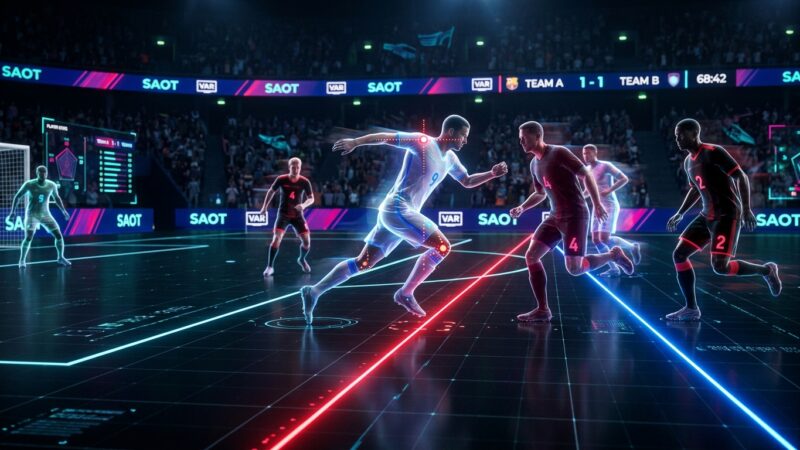
If VAR expansion brings pauses, the upgrades to Semi-Automated Offside Technology (SAOT) have brought much-needed speed. Showcased prominently at the 2026 World Cup, the latest iteration of SAOT can make offside determinations in under one second.
This rapid-fire technology uses skeletal tracking and sensors within the match ball to eliminate the agonizing, multi-minute waits that used to kill stadium atmospheres. For attacking teams, this technology is incredibly liberating. Forwards are being coached to play right on the shoulder of the last defender, trusting that the technology is precise enough to validate perfectly timed runs without the risk of human error from the linesman.
Conversely, defensive coaches are having to drill their backlines with meticulous precision. The old-school tactic of stepping up simultaneously to catch an attacker offside is incredibly risky when a computer is tracking every millimeter of movement. The margins have never been finer, and the resulting football is faster and more fluid.
The Evolution of Player Conditioning
With a 104-match World Cup, an expanded Champions League format, and high-intensity domestic leagues, the physical demands placed on top-tier footballers in 2026 are unprecedented. The stories shaping the sport aren’t just happening on the pitch; they are happening in the sports science laboratories.
Clubs are investing heavily in personalized recovery protocols, advanced biomechanics, and load management strategies. The depth of a squad is no longer a luxury; it is a hard necessity. We are seeing a trend where managers rotate their starting XIs far more aggressively than in previous decades, utilizing all five available substitutions strategically to maintain pressing intensity for the full 90 minutes.
This focus on conditioning has also prolonged the careers of elite players. The game is getting faster, yet players are adapting, showcasing levels of stamina and durability that would have seemed impossible just twenty years ago.
FAQ Section
1. Where is the 2026 FIFA World Cup being held?
The 2026 FIFA World Cup is being co-hosted by three North American countries: the United States, Canada, and Mexico. Matches are spread across 16 world-class cities, making it the most geographically expansive World Cup in history.
2. How many teams are in the 2026 World Cup?
For the first time ever, the 2026 World Cup features 48 participating nations, expanding from the traditional 32-team format. This expansion resulted in a total of 104 matches being played throughout the tournament.
3. Who won the 2026 UEFA Champions League?
Paris Saint-Germain won the 2026 UEFA Champions League. They defeated Arsenal 1-1 (4-3 on penalties) in the final held at the Puskás Aréna in Budapest, successfully defending their 2025 title.
4. What is the new 8-second rule in football?
Introduced in 2026, the 8-second rule requires goalkeepers to release the ball from their hands within eight seconds of catching it. Referees provide a visible five-second countdown. Failure to release the ball results in a corner kick awarded to the opposing team.
5. How has VAR changed in 2026?
VAR authority was expanded in 2026 to include reviews for corner kick decisions and second yellow cards. Additionally, upgraded Semi-Automated Offside Technology allows for offside calls to be made in under one second, significantly speeding up the game.
Conclusion
The year 2026 will undoubtedly go down in the annals of football history as a year of immense transformation. We are witnessing the democratization of the global game with the 48-team World Cup, providing unprecedented opportunities for emerging footballing nations. Concurrently, Paris Saint-Germain has solidified a modern dynasty, proving that back-to-back Champions League victories are possible in an era of hyper-competitive European football.
Perhaps most importantly, the foundational rules of the sport have evolved. The mandatory hydration breaks, the strict 8-second rule for goalkeepers, and the lightning-fast automated offside technology are fundamentally changing how the game is coached and played. Football in 2026 is faster, more tactical, and more demanding than ever before.
As the World Cup continues to deliver daily drama across North America, one thing is certain: the beautiful game is in a state of thrilling evolution.
Want to stay on top of all the latest football tactics, transfer rumors, and match analysis? Bookmark our website and explore our deep-dive tactical breakdowns and exclusive interviews. Join the conversation in the comments below, and let us know what you think the biggest story of 2026 has been so far!

My name is Jeferson, a passionate football enthusiast and the creator of this portal dedicated to fans of the world’s most popular sport. My goal is to provide reliable information, up-to-date news, match analysis, transfer updates, tournament coverage, and everything happening both on and off the pitch.